



You can’t grow quality Koshihikari rice outside of Japan. At least that’s what some agricultural professionals in Japan once believed of the famed Japanese table rice that’s also used in several Japanese craft beers, most notably the internationally distributed lager, Koshihikari Echigo Beer. Swan Lake’s Koshihikari Beer is another fine example. But when a Japanese rice economist mentioned this to the patriarch of a 6th-generation family of rice farmers in Arkansas at an agricultural conference in the 1990s, that farmer set out to prove the assumption wrong. His decision, once an obscure footnote in American agricultural history, now looks as if it will play a part in new developments that could revolutionize the beer industry in America, in Japan, and beyond.
Before detailing the history of rice lagers, let’s delve into the story of that family farm in Arkansas, called Isbell Farms. Drawing from a lengthy interview for Sake Today magazine no.38 (fall 2023), their history as it concerns alcohol beverages starts with the farmer Chris Isbell, whose great-grandfather began clearing land in the rural state in the late 19th century. For those unaware, Arkansas is the rice basket of America, producing roughly 50% of all rice grown in the country. Chris’ father was the first to plant rice on the farm in 1946 while his grandson Harrison Jones continues the family commitment to the farm (and is now coordinating efforts to work with beer brewers).
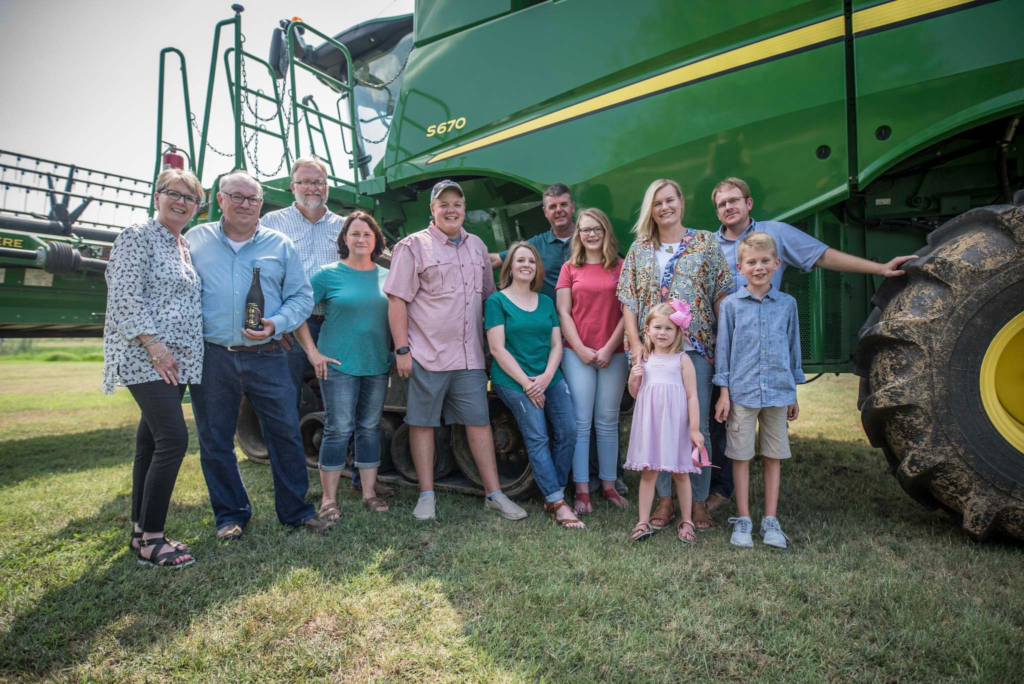
As Chris notes, Japanese varieties of rice were among the first to be grown in Arkansas in the early 1900s, beginning with a strain labeled “Unnamed Japanese Variety” that many used for cross-breeding. Chris believes it was probably Wataribune. There seemed to be no reason, in other words, that Koshihikari couldn’t grow in America, much less a place so conducive to rice cultivation like hot, damp Arkansas. After obtaining seeds and successfully growing their first field in 1990, they sent a sample to Nishimoto Trading (now operating as Wismettac Asian Foods; it imports both Asahi Beer and Coedo Beer to the U.S.). They were impressed enough to eventually start selling the rice domestically.
When the story of this family ‘miraculously’ growing Koshihikari in the heart of America reached Japan, there was a groundswell of interest, so much so that newspaper reporters and TV producers approached them. NHK, of note, did a 90-minute documentary about the Isabells in the early 1990s. Shortly thereafter, tour buses filled with Japanese began arriving at the farm.
Chris says, “We’d feed them rice, show them around the farm, let them shoot a shotgun if they wanted to.”
His then-teenage daughter Whitney—now mother to Harrison—would get on the buses as an emcee. Family Mart furthermore had a campaign giving away trips to visit Isbell Farms if customers bought Koshihikari rice that was cultivated on the farm and exported to Japan. The packaging featured a picture of the Isbell family.
In the late 1990s their fortunes shifted. California started growing Koshihikari and for various logistical reasons that became the center of its cultivation in America. The Isbells reckon they didn’t even grow Koshihikari into the 2000s. The popularity of sushi was also taking off in America, and a cheaper, more readily cultivated American variety called Calrose became an affordable go-to rice for many.
The aughts were a relatively quiet period for the Isbells when it came to growing Japanese rice. Chris reveals that they grew some small amounts of Hitomebore, Akitakomachi, and Nipponbare in a plot, but they never recaptured the magic of that Koshihikari period. Then Chris went to a conference in Japan and heard about Yamada Nishiki, that most-prized Japanese sake rice variety. Intrigued, in the mid-aughts he brought about 100 grams through quarantine.
He planted it in an experimental plot but laughs, “The agronomics were terrible! It was like four feet tall, it falls over, it’s hard to grow, hard to harvest. I didn’t have a market for it and didn’t even know if there was one in the U.S.”
After five years he had grown his stock to a mere thirty pounds, which he put into cold storage for some future opportunity. Another five years passed before Takara Sake suddenly called him, asking if he had Yamada Nishiki.
“I don’t have a clue how they found out about me,” Chris says. “In two days they were here. They wanted five acres but I couldn’t plant that much with my seed. I planted one, harvested it, then moved up to five next season. That was enough for them to brew.”
Takara USA (Berkeley, California) was working on a premium daiginjō sake, after having been a major supplier of futsū-shu (table sake) for decades while Japanese restaurants and cuisine grew in popularity in America. Chris remarks being amazed by how good the final product tasted. That sake went on to garner awards as industrial brewer Takara USA successfully proved that it was fully capable of brewing premium sake.
The funny thing is that the Isbell family had no idea that Takara USA even existed until they got the call, nor that there were other sake breweries in America. In fact, almost like an echo of the craft beer movement, small sake breweries were starting to appear across the country. One of them, Origami Sake, was even established nearby in Hot Springs, the culmination of the dream of a local named Ben Bell who had trained at Nanbu Bijin (Iwate, Japan).
Today, there are over thirty sake breweries in America, with more on the way. Several of them are very good. Isbell Farms not only supplies many of these with Yamada Nishiki and other sake rice varieties, but also a handful of sake breweries in Europe and the Americas. Additionally, they are involved in a rice milling operation with state-of-the-art machinery from Japan. This, too, is part of the story now tying them to the craft beer movement.
—
As the American sake scene grew and diversified over the last decade, there were interesting developments in the context of rice (and other adjuncts) in America’s craft beer scene. For starters, the trend of craft breweries making rice lagers has been quite pronounced. In fact, for 2026 the World Beer Cup (WBC) organizers introduced a Rice Lager category that drew 91 entries. Many of the American breweries producing these beers are calling them Japanese rice lagers, Japanese-style lagers, or simply Japanese lagers. They were consciously paying homage to Japan’s light lagers, which of course are predominantly brewed by its industrial giants. This year’s WBC bronze winner, Oregon-based pFriem’s “Japanese Lager”, bills itself as “Brewed with rice in the Japanese tradition.” But what that “tradition” actually means in the minds of craft brewers outside of Japan, or for that matter what that tradition is within Japan, is not so clearly defined. There are a lot of layers to peel away here…
What’s first interesting about this is that over the last decade or so, Japanese industrial breweries have pivoted toward releasing premium and/or more flavorful beers in the vein of American craft beer. Most notable among them is Kirin, whose subsidiary Spring Valley Brewery positions itself as a craft brewery and has done quite well on the international stage when it comes to awards for its beers (it took home a gold and a silver medal from this year’s WBC).
American breweries, whether they realize it or not, are chasing a tradition largely defined by Japan’s industrial breweries. While many Japanese craft breweries are making excellent varieties of pilsners and lagers, very few are making light lagers that seek to capture the character of Japan’s industrial examples. Japanese craft breweries making rice beers are generally doing so with a nod to sake: using sake rice, koji, lees, and/or sake yeast. Shiga Kogen’s Miyama Blonde, using home-grown Miyamanishiki rice, is a great example (and notably not a lager). Daisen G Beer brews several, their prominent example being Yago, which uses local Yamada Nishiki. Given Japan’s ancient, hallowed sake tradition and that several dozen craft breweries in Japan are also sake breweries, this is not surprising (Shiga Kogen and Daisen G both are a part of older sake brewery businesses).
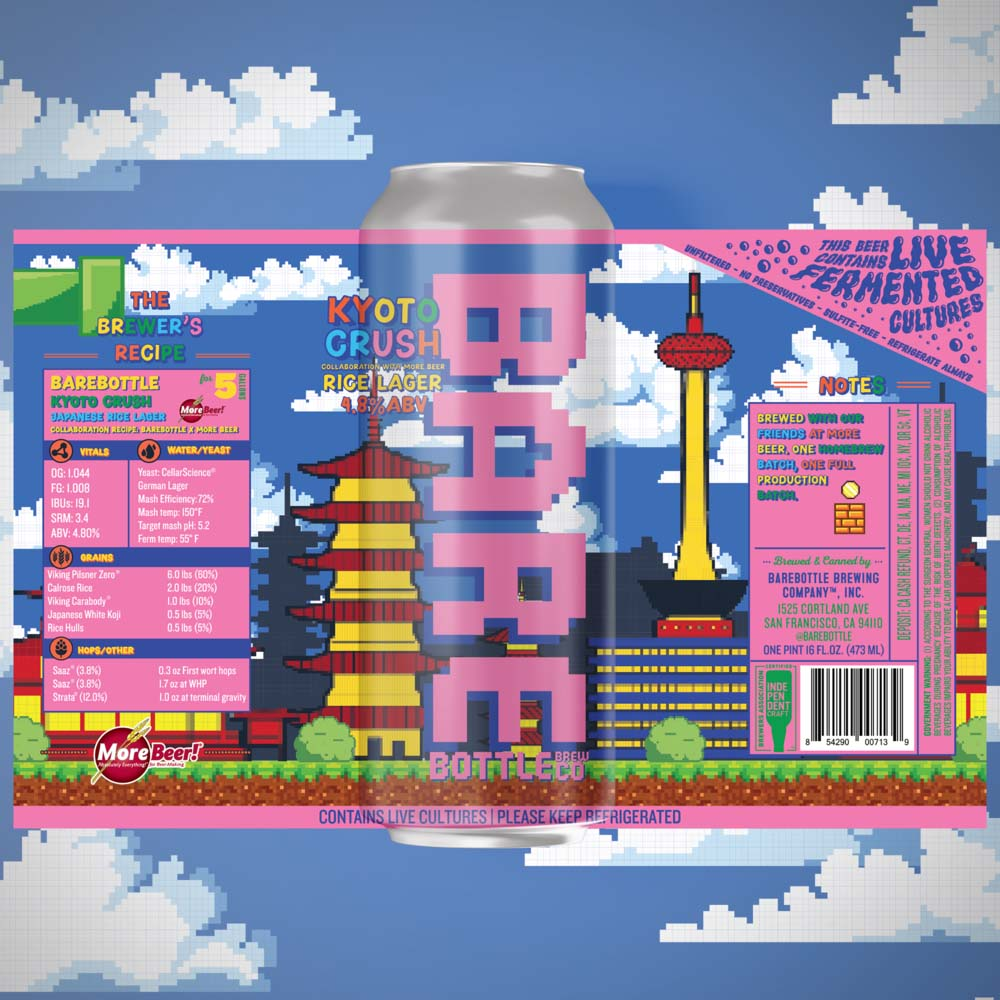
What’s surprising is that if you are looking for craft brews in Japan that reflect the character of the country’s light lagers, you may be more likely to find it among American imports to Japan! One recent example is Kyoto Crush by Bare Bottle, whose owner Lester Koga has become a regular traveler to Japan. Other breweries that also export to Japan and produce rice lagers include Chuckanut, Saint Adarius Rustic Ales, Fieldwork, and Faction.
But again, what is the tradition of rice lagers in Japan? As Jeffrey Alexander notes in his 2013 book, Brewed in Japan, during the 20th century the Japanese grew accustomed to lagers produced during the war years that were lighter because of malt rationing (more on that below). During the post-WWII economic recovery, Japan’s beer consumption grew dramatically and those light lagers became the standard–as light lagers did most everywhere else in the world, albeit under different conditions. In the late 1950s, beer consumption in Japan surpassed sake and never looked back. The typically crisp, dry, refreshing character of these beers was achieved in part through adjuncts, including, but not limited to, rice. Rice has never been showcased nor used as a large percentage of the grain bill; barley malt accounts for two-thirds or more.
This style of light lager culminated with Asahi Super Dry, released in 1987 and recognized by many as the banner beer of Japan. Its stratospheric success kicked off the Dry Wars (dorai sensō) among breweries as they tried to rush similar products to market. Asahi states without hesitation, “Asahi Super Dry is brewed using the finest malted barley, hops, yeast and rice.” The exact percentage of rice is a trade secret, but is probably a little more than 10% (based on assumptions tied to Japan’s Liquor Tax Law regarding adjunct restrictions in beer and also brewing chemistry; brewers, furthermore, that have tried to brew clones of the beer estimate rice in the 10 to 20% range).
Another brand that deserves attention alongside Asahi Super Dry is Kirin Lager, which also uses rice in its modern version and whose origins date back to 1888. As Kirin notes on its website, rice had been used by the country’s breweries as an adjunct since the late 1890s. This was due in part to the cost and difficulty of getting good malt. A legal revision in 1940 to address war-related rice shortages encouraged the use of other adjuncts (corn, for example). Furthermore, the law previously capped adjuncts at three-tenths the weight of the malt, but after the revision, it increased to up to one-half. By 1944, rice was completely unavailable and beer depended on only malt and “starch”, resulting in even lighter beer. Japan’s oldest brand, Sapporo Lager (Akaboshi), which launched in 1877, is also a rice lager in its modern version along with several other brands in the Sapporo portfolio. It, of course, shares the same history.
Meanwhile, Suntory introduced its all-malt beer Suntory Malt’s in 1986, followed by Suntory The Premium Malt’s in 1989. Not to be outdone, Kirin debuted the all-malt Kirin Ichiban in 1990. Even earlier than that, in 1971, Sapporo revived Yebisu–once an independent brewery–in the spirit of German Reinheitsgebot regulations (only barley, hops, yeast, water), making it the first post-WWII beer to attain this standard. The Dry Wars may have been ongoing, but Japanese consumers hardly abandon German-style lager beers.
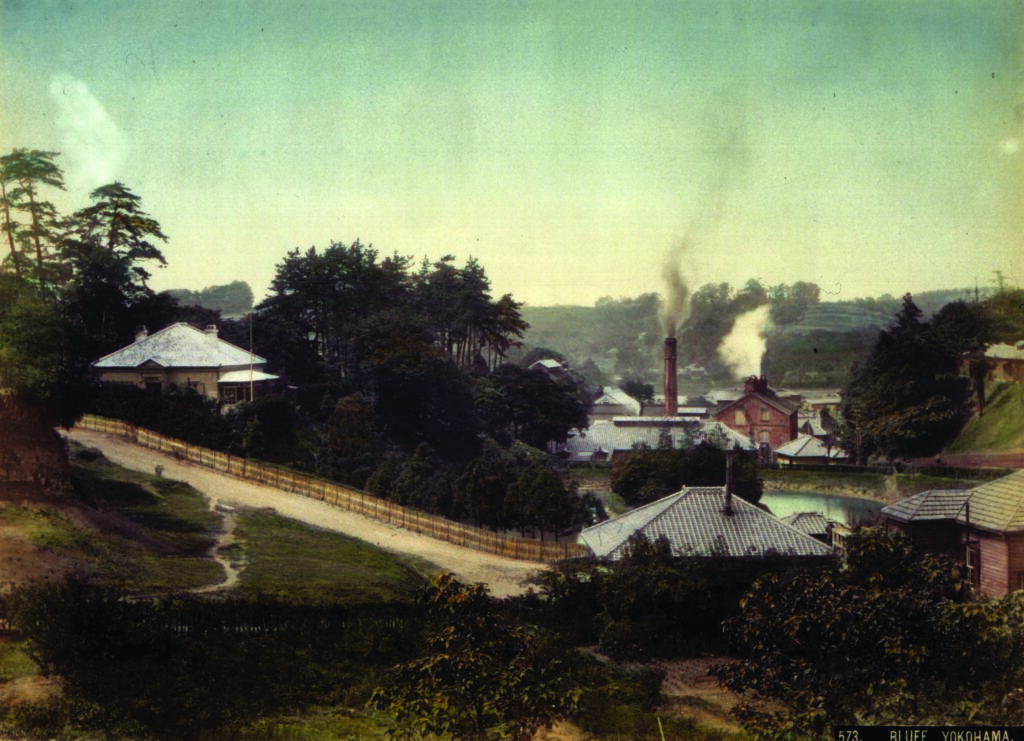
All-malt macro-beers in Japan continue to be popular and viewed as premium in nature—that being an effect of marketing as much as consumer perception of more prominent flavor. Such beers are a return to Japan’s late-19th and early-20th century brewing roots in the German tradition (or German tradition by way of America in the case of Norwegian-American William Copeland, who founded what would become Kirin in Yokohama in 1870). Japan’s brewing tradition is consequently more diverse than most people outside Japan realize.
It’s worth remembering the impact of all-malt beers in any consideration of Japan’s tradition. And when it comes to so-called rice lagers, there are two things that demand consideration. Other adjuncts were—and still are—part of the adjunct mix that creates the clean, dry character. And while light lagers have been common since WWII, the dry lagers people outside Japan associate with the rice lager tradition have only been prominent for a few decades. There is no question, though, that Japan’s light lagers have dominated public consciousness. And that some of America’s best craft breweries would want to recreate “Japanese-style” rice-adjunct lagers is still a nod of respect to Japan’s industrial breweries.
This marks the end of the first part of a multi-part series on rice beers. Please join us next issue as we discuss the deep history of rice beers in America, how Isbell Farms (and others) are adding to rice beer history, and a University of Arkansas professor that believes the industry is on the cusp of change.