
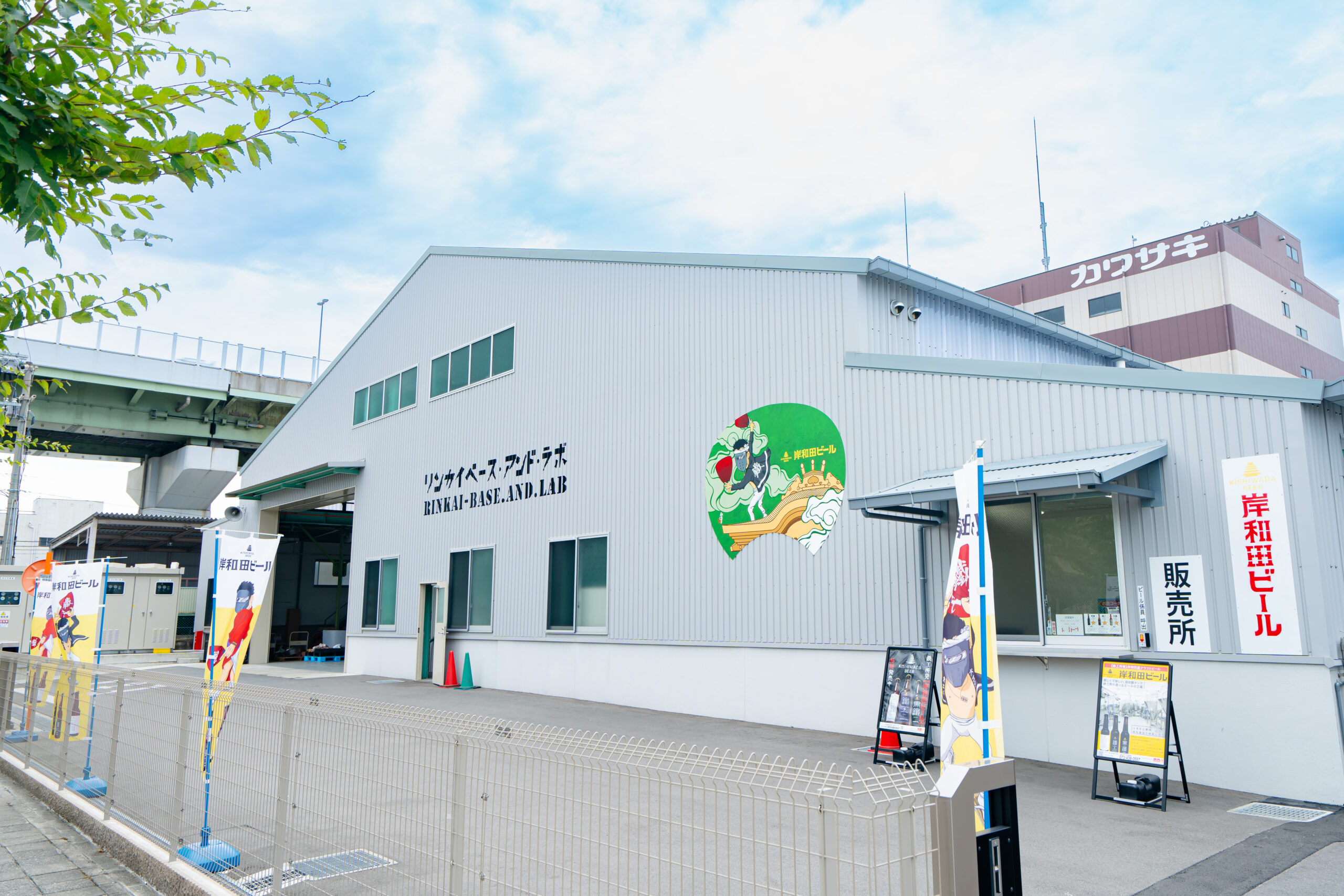
Since the birth of craft beer in Japan 30 years ago, there have always been businesses not initially involved in brewing that started operations: hotels, agricultural entities, resorts, liquor distributors, and more. So why not an equipment manufacturer? There have been several, actually, and Hokkai Iron Works Co. is one of the more recent ones. To learn more about why, here we posed some questions to its team: head brewer Yamatani, managing director Ishibashi, operations employee Ueda, and sales manager Hata.
We understand that for many years Hokkai Iron Works Co. has been engaged in the manufacture of “dished heads” (the curved metal ‘caps’ that seal off pressure vessel tanks). For starters, could you tell us about your founding and your main business activities to date? In addition, we would appreciate it if you could share with us the industries and products to which you have supplied your panels, as well as your company’s technical strengths.
Yamatani: Hokkai Iron Works originally started as a fabrication business manufacturing pressure vessel tanks. However, we faced considerable difficulties because the dished heads we purchased from outside suppliers were unstable in terms of quality, delivery times, and cost. Frustrated by these issues, our founder and current Chairman, Mr. Hayashi, decided that we would make the dishedheads ourselves rather than rely on others. His determination marked the start of our in-house dished heads business, which continues to this day.
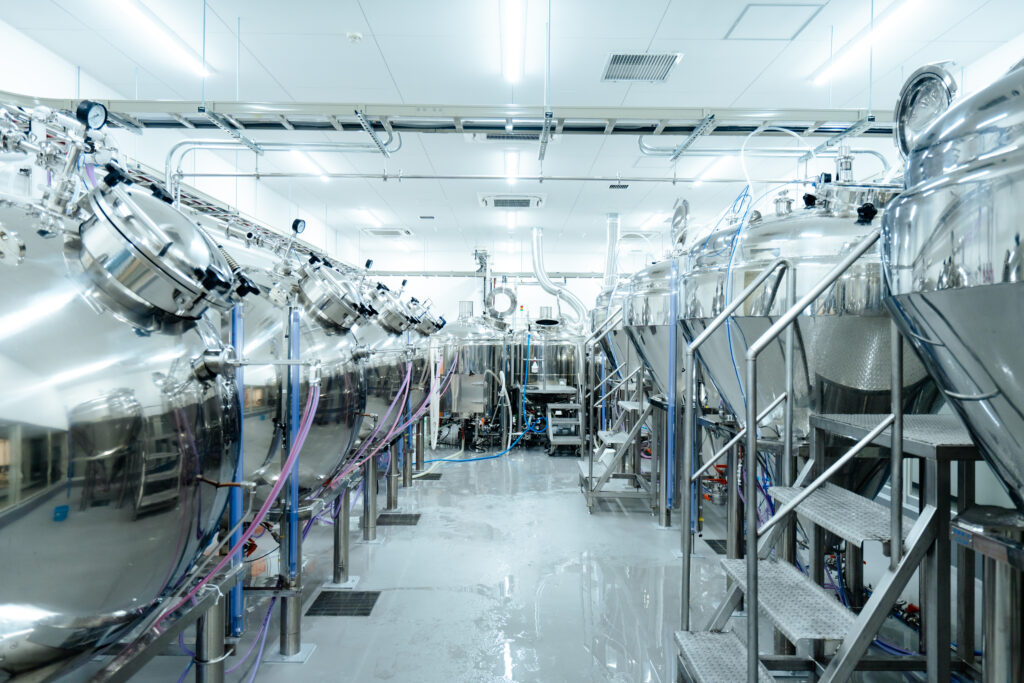
Dished heads are a critical component of pressure vessels, requiring considerable high quality. To fulfil this, we developed a large, one-of-a-kind, double-action hydraulic press machine dedicated solely to manufacturing dished heads—an achievement we lay sole claim to. We achieved 30 times greater productivity, allowing us to finally promise our customers higher quality, shorter delivery times, and fair pricing. Today, our dished heads are used in a wide range of fields, including food products, medical supplies, and nuclear power.
Outside of our dished heads business, we also operate the following divisions: a railcar division that manufactures and sells frame parts for railway vehicles; a landscape division that designs, manufactures, and sells decorative monuments and other structures; an engineering division that handles specialized metal bending and other custom fabrication projects to address our customers’ unique challenges; and now a craft beer division that brews and sells craft beer.
Given that background, could you tell us what inspired or prompted you to enter the craft beer business?
Yamatani: President Hayashi wanted to drink beer brewed in tanks that we had manufacturered ourselves, and that’s what inspired the new business direction. Our beer tanks are specially manufactured in-house, and visitors that see them in person can appreciate our advanced technical capabilities. In addition, our company has deep roots in our home of Kishiwada City. Part of our motivation for starting the craft beer business was to provide some economic stimulus for the city through craft beer.
When you produced the tanks for Kishiwada Beer, were there any aspects you were especially particular about or innovations you incorporated? Also, could you share your thoughts on whether you plan to manufacture and sell beer tanks for other craft beer businesses in the future?
Ishibashi: The tanks we produced for this project were designed and built with the idea of creating one-of-a-kind brewing equipment that combines both design and functionality. “Space” was the concept we worked with. Even as standalone units, the tanks feature design elements that evoke a spaceship. When lined up together, they create the sense of a space station within the brewery. As for what lies ahead, we’re ready to start working with a flexible approach on the manufacture and sale of such brewing equipment to other craft beer businesses. If brewers have any particular needs or interest, we would be delighted to engage with them.
Please tell us more about the character of Kishiwada Beer. For example, there are breweries that specialize in lagers, those that focus on ales, or ones that produce different German-style or fruit beers. If there are any unique characteristics of Kishiwada Beer, or a particular flavor profile or direction you are aiming for, please share.
Yamatani: Kishiwada Beer is characterized by its drinkability. While craft beer is often known for having very distinctive and unique flavors, we tend to focus our attention on a comfortable balance of taste and aroma so that anybody can enjoy it.
Could you briefly introduce each of your three main beers? Also, regarding seasonal or limited-edition brews, we’d love to hear about the ideas behind them and any interesting ingredients you may have used.
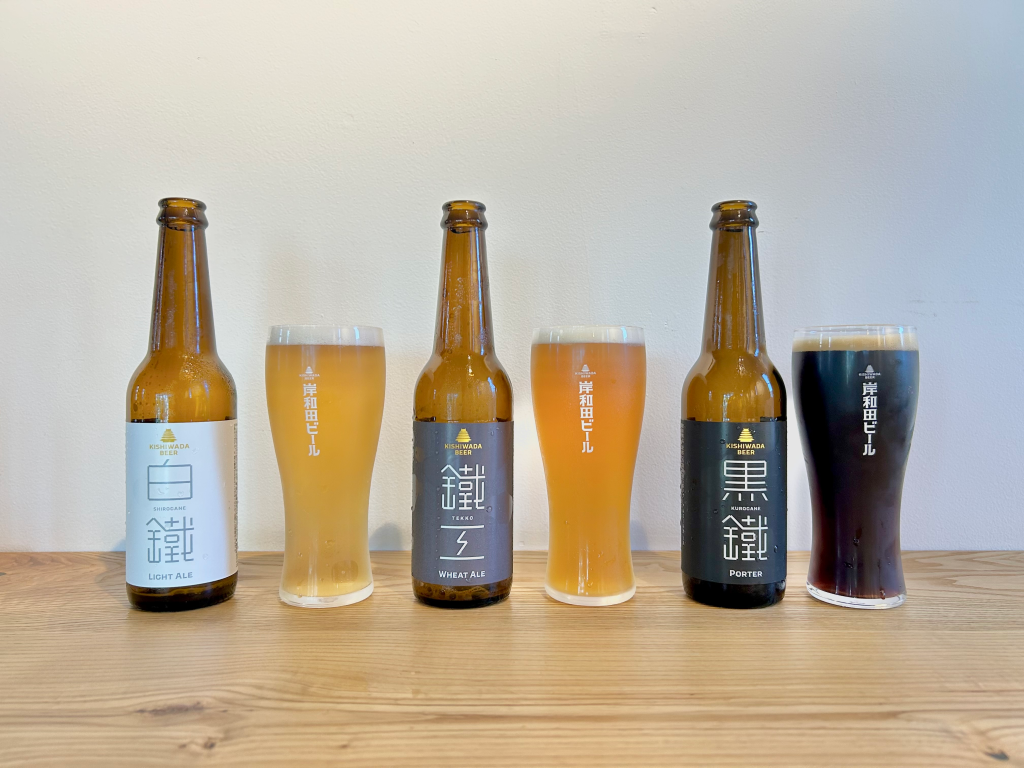
Ueda: Please allow me to introduce our three flagship beers…
First, our top seller is Tekkō. It’s brewed with over 50% wheat malt, yielding a smoother, more drinkable mouthfeel than your typical ale. By using citrusy hops with bright aroma, it delivers a refreshing finish. Last year, it won a Bronze Award in the “Light American Wheat Beer” category at the Japan Great Beer Awards.
Next you have Kurogane, our dark beer, which has taken home two awards. It features roasted flavor and richness from a blend of roasted malt and caramel malt. Despite being a dark beer, it goes down easily, making it a great choice for those who are new to the style or who usually avoid dark beers. Alongside Tekkō, it won the Gold Award in the Brown Porter category at the Japan Great Beer Awards. That same year, at the International Beer Cup, it also won Gold in the Brown Porter category, and was further named Category Champion in the British Heritage section.
Lastly, we have Shirogane. With its light, crisp finish, Shirogane is by far the easiest-drinking beer in the Kishiwada Beer lineup. Even people who aren’t fond of hop aromas or who don’t usually enjoy beer find themselves coming back for another glass. It’s especially popular among those new to beer. Shirogane also pairs well with fish, including sashimi, and has been well received by restaurants we sell to.
We’re proud of our mainstays and definitely hope folks give them a try!
Yamatani: Since we’re based here in Kishiwada City, we began brewing beers that use local specialties from the Senshu region, as well as agricultural products grown in Kishiwada. We hope to support the local community and promote local production for local consumption. Some of the flavored beers we brewed on an OEM basis used hassaku oranges and lemons, and were well received by consumers and judges at competitions (including those above that won gold). We have also collaborated with Isaka Shuzo, Kishiwada’s legacy sake brewery, to create a sake beer made with their sake lees. Going forward, we want to continue with the theme of local production for local consumption and create many more unique beers that showcase the region’s specialties.
We were interested to see that your website features beer cocktail recipes for each of your three flagship beers. Could you tell us what inspired you to start suggesting these cocktail recipes, and the background behind that decision?
Ueda: Again, Kishiwada Beer was conceived as an easily drinkable craft beer. What drove this was President Hayashi’s wish for everyone to be able to raise a toast together. Kishiwada Beer is sessionable enough that those new to beer find it appealing, but when made into a beer cocktail, it becomes even more approachable for many–it allows people to enjoy new variations in flavor. We thought that by suggesting beer cocktail recipes tailored to each of our three beers on our website, more people might discover our appeal. We introduced these cocktail recipes basically for those that don’t normally like beer, or who have never even tried craft–they might still be able to join in a toast and enjoy it!
Yamatani, could you please tell us a little more about yourself? As the head brewer, what sort of training have you received and where?
Yamatani: Previously, I was mainly involved in the dished heads manufactureing business at Hokkai Tekkojo. Then, when the company decided to launch a full-scale craft beer business, I was suddenly tapped to be the brewer. Since I had no prior knowledge or technical skills, I trained at other breweries and studied through books and the internet. Although brewing was completely different from my previous line of work and there were many challenges, everything was new to me and I had a blast learning.
At present, it seems that your beers are mainly available at select Seven-Eleven stores and Co-op outlets within Osaka Prefecture. Do you have any plans to expand your footprint in the future?
Hata: Nationwide expansion is on the table. However, we’re not simply concerned with becoming widely known across Japan. Personally, I would like to see our beers placed in restaurants patronized by craft beer fans, and in shops where people expect to find truly good beer. At the same time, I’d like to help boost the number of restaurants and shops that carry craft beer and thus do my part for the craft beer industry as a whole. This may sound a bit bold, but my hope is that restaurants and shops which do not currently carry craft beer might be inspired to start doing so because of our beers. That’s the motivation that drives me.
We saw that you are involved with initiatives such as the “Kodomo MIRAI Fund Kishiwada,” a children’s support fund, as well as SDGs-related activities (Sustainable Development Goals). Could you tell us more about your social contribution efforts?
Ueda: Kishiwada Beer donates a portion of its sales to the Kodomo MIRAI Fund Kishiwada. The fund was established to support the healthy growth of children born and raised in Kishiwada. Our vision is for all children of Kishiwada to receive equal educational opportunities, cherish their individuality, dream and feel hope for the future, and celebrate life. We also hope to cultivate more adults who can support children facing hardships so that when they feel ready take life on, someone will be there to back them up. This fund was founded to connect these various hopes for a better future. It’s led by business leaders, driven by engaged citizens working in community development, and it includes intermediary organizations in commerce and welfare, combining their collective wisdom and effort.
Kishiwada Beer is indeed actively engaged in SDGs initiatives. For example, the spent grain produced during brewing is reused as fertilizer for local fields. Through cooperation with Hannan City, we processed oyster shells that previously had to be discarded from oyster huts and used them to create filtered water, which was then used to brew an OEM beer. Beyond that, we continue to develop new initiatives related to the SDGs.Through Kishiwada Beer, we hope to further contribute to building a vibrant community, while also looking ahead to 2046, when our parent company, the Hokkai Group, will celebrate its 100th anniversary. Guided by our company philosophy, we aim to “contribute to the realization of a sustainable society.”