



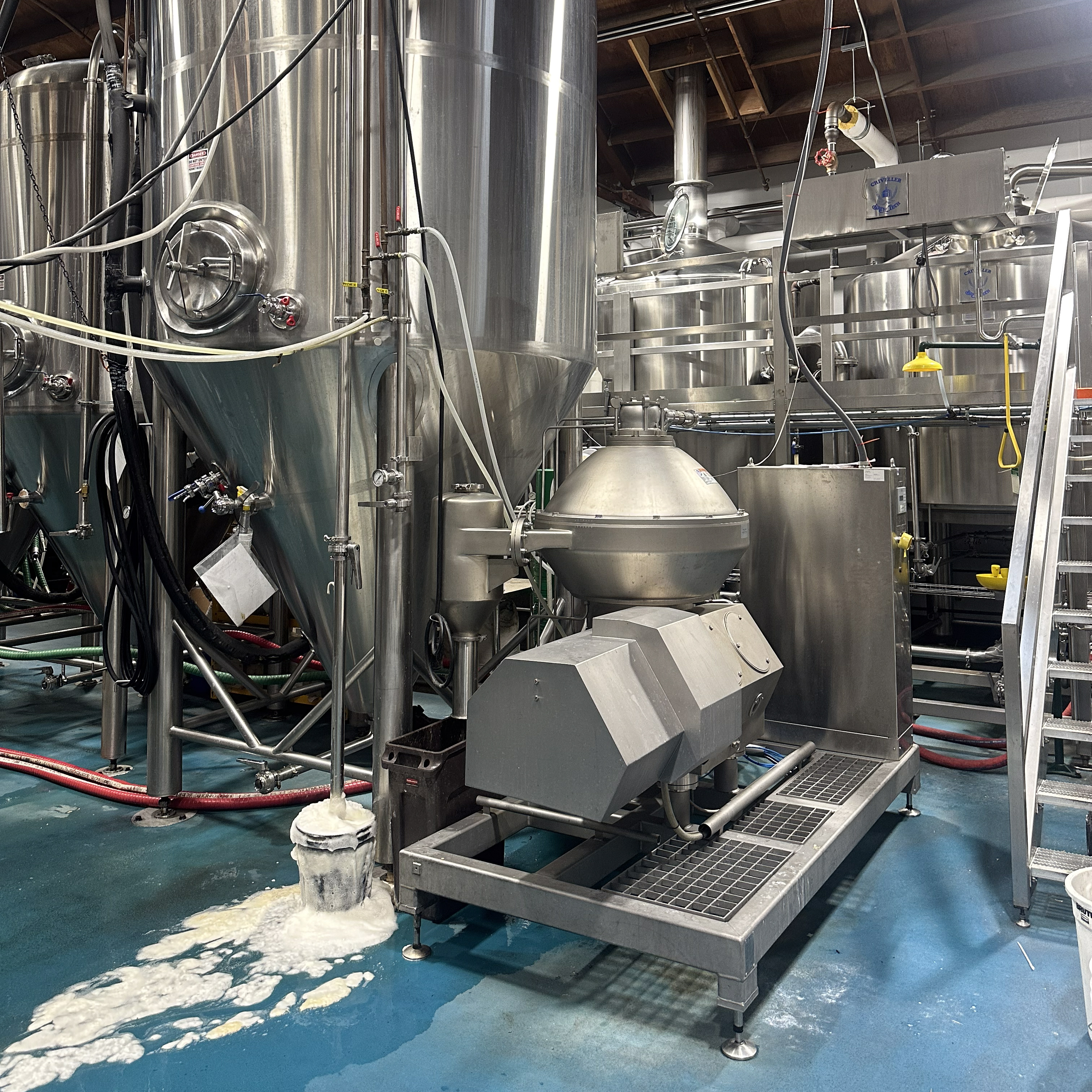
Alfa Laval’s centrifuges were one topic of our interview with James Fox of Kyoto Brewing Company in JBT60. As we noted, “a centrifuge is a machine that separates solids—such as yeast, hops, and proteins—from the liquid beer through centrifugal force, most often performed during the transfer from fermentation to the conditioning tank.” We’ve increasingly seen Alfa Laval’s centrifuges in craft breweries, but they’re pricey. Are they worth it?
For a brewery experiencing demand and/or capacity issues, it’s a “no brainer” in the words of Fieldwork Brewing Company’s production team. This Berkeley, California-based brewery (imported to Japan by Nagano Trading) was named one of the San Francisco Bay Area’s fastest growing businesses a few years ago. Yes, in a region of tech start-ups, it impressively made the top-ten among all businesses! The brewery’s growth put incredible demands on staff, but they kept up by brewing super efficiently.
Their centrifuge speeds up beer separation as noted above, thus they can cycle through fermentation tanks more quickly. Traditional techniques require more time for gravity settling and/or the use of less efficient filters. Due to the limitations of filters, a centrifuge results in increased beer yields as well. There are also quality advantages. According to Alfa Laval, there’s reduced aroma loss, which can occur during other filtration and clarification methods due to the loss of volatile compounds. Furthermore, the centrifuges are hermetic; there’s no oxygen pick-up. Oxidation affects shelf life, and nobody wants to drink a pale ale that tastes like cardboard or stale crackers.
Downsides? We’ve mentioned the costs, but the units likely pay for themselves with increased yields and time savings. They require space, too, which comes at a premium in Japan. Luckily for brewers, Alfa Laval has introduced smaller models for craft breweries. They are no longer the shiny gods of industrial breweries alone!
For more info please visit: www.alfalaval.jp