



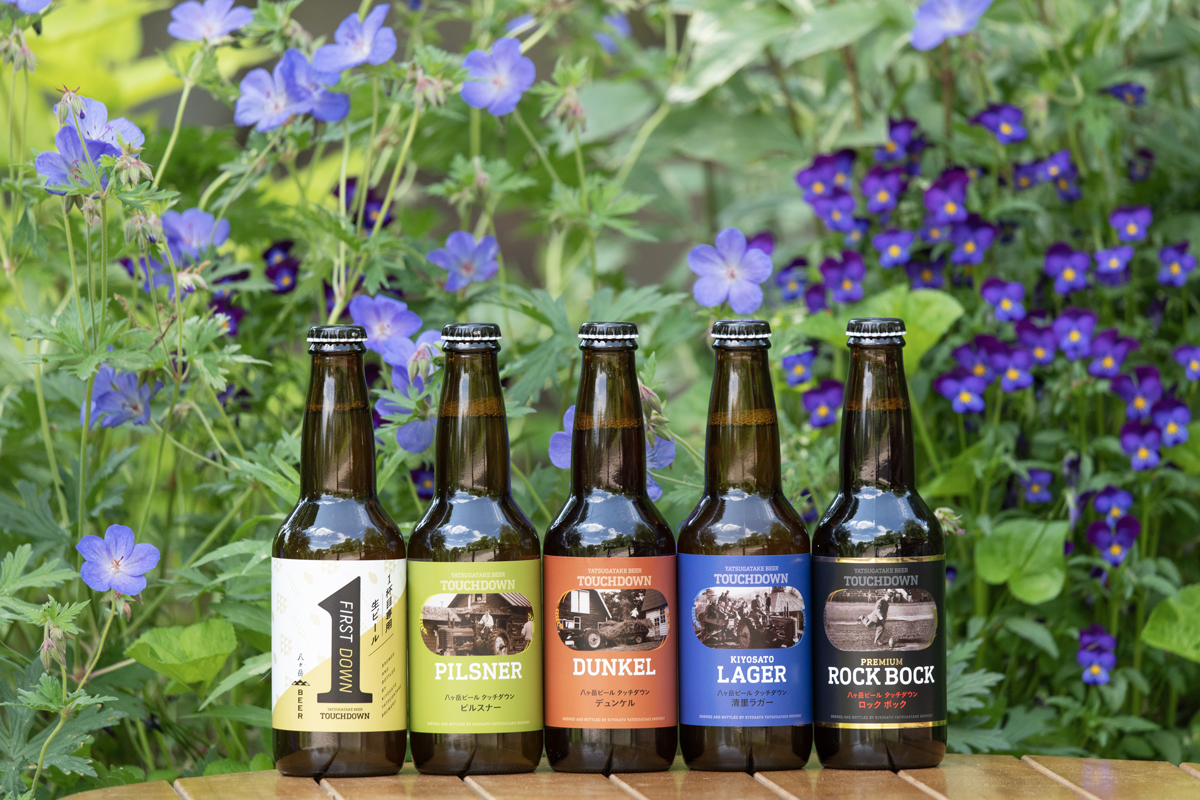
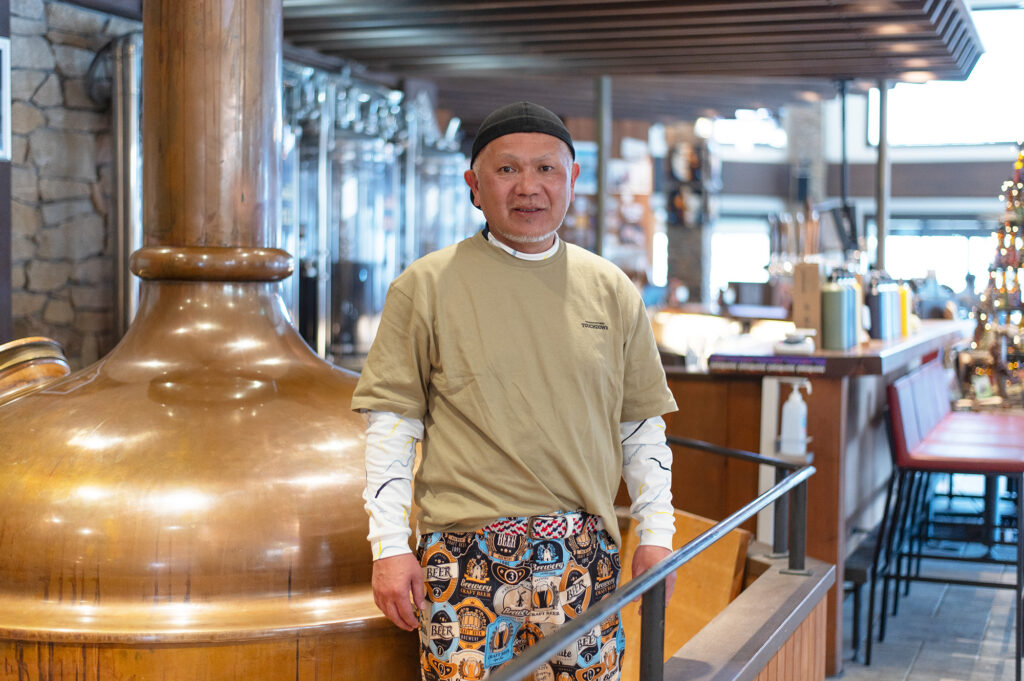
Yatsugatake Brewery in Hokuto, Yamanashi is an established brewery dating back to 1997. The first brewer was Kazumi Yamada, known widely for his role as the development manager for Kirin’s Ichiban Shibori. Since the brewery is located adjacent to the popular tourist spot Moegi no Mura ROCK in Kiyosato Kogen, their beers have been quenching the thirst of many visitors for over twenty-seven years. In June 2024, the brewery welcomed a new head brewer and a legendary figure of Japanese craft beer, Hiromichi (“Tentsu”) Miyashita, who worked for many years at Fujizakura Heights Beer in the same prefecture. This news came up in our conversation with Eigo Sato from Shiga Kogen Brewery (see JBT59), but for this issue we decided to interview Miyashita himself about the story.
Congratulations on becoming the head brewer at Yatsugatake Brewery! Now that it’s been about six months, how are things going for you?
For about three months after joining in June, I participated in events and worked alongside the previous brewer to brew some of our standard beers. After that, I focused on understanding more via our equipment manuals. Around late October, I began to feel more comfortable. I’ve started making improvements while preserving the traditions here, as well as asserting my own style. For example, at Fujizakura, all the equipment was automated, and the heating system would automatically adjust the temperature, but here everything is still manual. At first, I had the habit of assuming the temperature would be managed automatically, and sometimes I only realized later that I forgot to adjust the temperature. However, thanks to many years of experience, I can recover from those situations–it’s still challenging, though. I believe that the reason the team at Yatsugatake Brewery decided to hire me wasn’t to have me lead the brewing team and brew a large volume of beer, but to upgrade the beers that are already here. I want to make Yatsugatake Brewery the most popular brewery in Yamanashi, and for it to be recognized throughout Japan and even internationally. I hope to train the team so they brew better together, and I’d be thrilled if we could make my Weizen a signature beer as it’s what I’m known for.
After working for decades at Fujizakura, what made you decide to leave and come to Yatsugatake Brewery?
The trigger was a role change in my previous job. The company was thinking of a generational shift due to my age, and it would’ve been difficult to continue brewing beer at the forefront of operations. At one point, I considered retiring, but the thought of leaving the beer industry I love so much was too painful; I chose to continue at a different brewery. There’s a Brewers Association in Yamanashi, and when we gathered at the end of the year, I realized that all the breweries were facing a shortage of skilled staff.
In 2016, when Yatsugatake Brewery was damaged by fire, I visited to offer support as part of Fujizakura. I’ll never forget when the president pleaded, “Tentsu, help us!” That moment really stayed with me, and that, along with my desire to continue making German-style beers, was the deciding factor in choosing to come to Yatsugatake Brewery. Although I received offers from other prefectures and even had the option to go independent, I wanted to help boost craft beer in Yamanashi. I was drawn to the fact that Yatsugatake Brewery values its connections with people. I’ve spent much of my life with Fujizakura, and I’m sure that I’m its biggest fan; however, my beers were still evolving and my motivation was high. I wanted to keep that passion alive and continue brewing.
Beer is so important in your life that you couldn’t retire, but how did your journey with it begin?
I’m from Fujiyoshida in Yamanashi, where youth baseball was very active, and I was a high school baseball player. Fujizakura was part of a company called Fuji Kanko Kaihatsu (Fuji Tourism Development), and after graduating from high school, I joined and worked in various roles, like making soba in the parking area or working at the ski resort. One day, I was called to the head office where the president asked me if I liked beer. When I said yes, he told me to go to Germany. Initially, I declined the offer due to language barriers, but he arranged for an interpreter, and I ended up going for training.
In 1996, I joined the second class of students at the Doemens Brewing School in Germany. I attended for a few months and earned some formal qualifications. While I felt a sense of duty to learn how to brew, the defining moment for me came on the first day when I had a Weizen from Weihenstephan at Munich Airport. It was an unforgettable shock—it was so much better than anything I had ever tasted. At that time in Japan, we were in the era of ji-beer. I had tasted various beers, but nothing compared to the taste of that Weizen. I realized that I wanted to create beers like those that conveyed the passion of the brewers behind them.
At brewing school, we could choose one 500ml bottle of beer every day. Having a meal with that beer was part of the learning process. On weekends, I would travel from Munich to various places like Düsseldorf to explore the beer culture. I think I ended up drinking about four liters a day on weekdays and around eight liters on weekends. Beyond the academics, it was incredibly inspiring to witness the German mindset toward beer—the way people would drink beer with their morning newspaper, almost like having tea. Having experienced that culture firsthand, I understand the weight of the title “Braumeister.” Because of that, I can only call myself a head brewer or brewing manager. I firmly believe that brewing is something I will continue to learn about for the rest of my life.
Since restarting at Yatsugatake Brewery, have you had any memorable experiences?
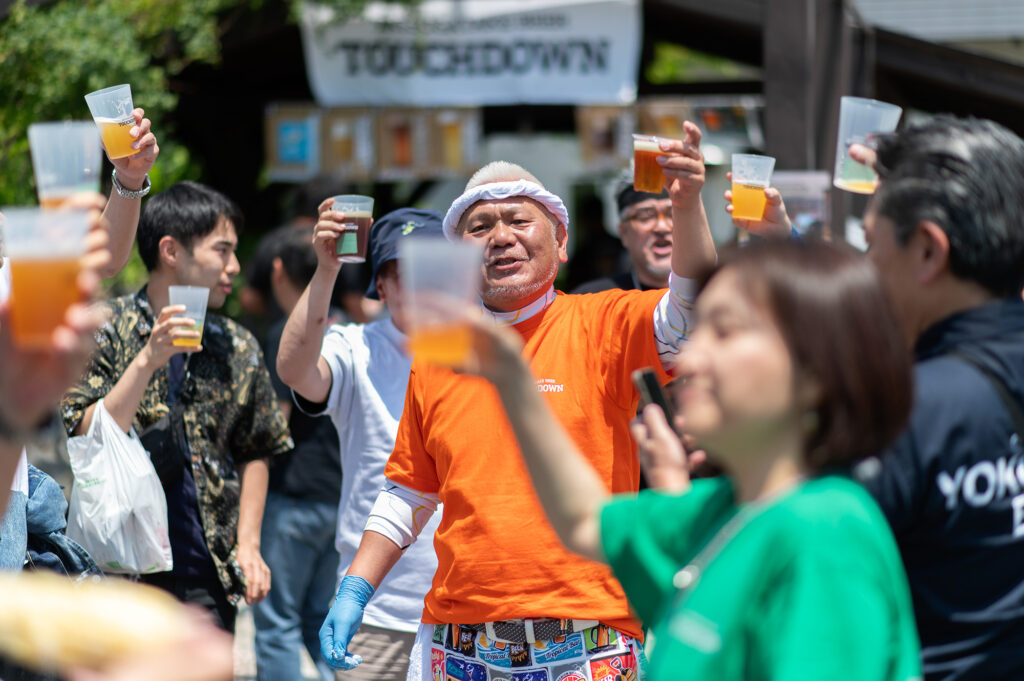
When I officially started working here in June, we held an event during the first week to celebrate both the 27th anniversary of Yatsugatake Brewery and my appointment as head brewer. Despite us being in such a rural area, so many people came out to support us, and I was reminded once again of the amazing connections in the craft beer community. Even people who initially said they couldn’t make it managed to find time to attend, which made me incredibly happy. I felt that I made the right decision in not retiring. The first year has been tough as I’ve had to get accustomed to everything, but next year, I want to demonstrate even more progress and unveil a kind of new Yatsugatake Brewery.
Are there any ideas or plans you’re currently working on for a new direction with Yatsugatake Brewery?
I’m considering some changes to the standard beers. The Pilsner, Dunkel, and Kiyosato Lager have been around since the brewery’s founding, and First Down was developed by Matsuoka, the former head brewer who currently operates Shimanami Brewery. Kiyosato Lager uses the local rice Rihoku-mai, and since First Down also uses rice, there’s talk of possibly transitioning First Down to my specialty, Weizen. While there are plenty of opportunities to change, especially since the standard beers all have similar alcohol content and a focus on lagers, there are also loyal fans of these beers. So, I’m planning to release a Chocolate Bock around February and offer a comparison with our regular Premium Rock Bock to give people a chance to experience something new.
It seems that ideas stemming from your years of experience have brought positive changes to Yatsugatake Brewery.
Indeed, right now I’m overwhelmed with ideas for improvements and challenges that I want to take on! At Yatsugatake Brewery, perhaps because of the rich-flavored curry served at the adjacent restaurant, ROCK, most of the beers have a gentle and crisp flavor profile. My first beer here was a Helles, which pairs perfectly with the spices in the curry due to its malty body. I decided to take this opportunity to try a style that goes beyond my usual expertise.
In addition to working on the beers themselves, I also want to use my experience to improve the brewing environment. To make great beer, you need a well-maintained facility, so I’ve been sharing observations about everything from cleaning the tanks to other small improvements. For example, when reviewing the manual, I noticed that the rotation speed during mashing was insufficient, so I increased the speed to ensure better stirring. As a result, the sugar yield improved. We’ve been tasting the beer since these changes and comparing them to see which method works best, then adjusting accordingly.
Another interesting aspect I noticed was the method used during filtration. After the first wort, most breweries add hot water once the grain bed is visible, but here, they press all the wort out completely. I’ve started by changing the process for just one or two beers to see how they impact the beer. Again, while preserving the traditions of Kiyosato, my goal is to enhance efficiency and continue making great beer. We’re brewing eight to nine times a month, an increase of two to three times compared to last year.
Here In Kiyosato, there’s an outdoor ballet performance called Field Ballet held every year, and to commemorate it, they have worked with Ichiro’s Malt from Chichibu or Suntory on a special whiskey blend. While we actively collaborate with breweries, I also want to explore collaborations with other types of alcoholic beverages. I’m excited about the potential to work on projects that cross the boundaries of the alcohol industry and bring something new and unique to the community.
At Yatsugatake Brewery, I’ve been given the opportunity to challenge myself with beer styles I couldn’t explore before. With the support of those around me, I want to continue making beer that reflects my own style and experience. When you enter ROCK, right by the entrance is the brewing kettle, and when I’m working there, I really enjoy engaging in conversations with the customers. It’s a great opportunity to connect with people. I’m deeply grateful for the current environment and the people who support me, as I get to live my life alongside the beer I love.