



Ask anyone in Japan what comes to mind when speaking of Kochi and with little hesitation they will have the same two answers: Ryoma Sakamoto and drinking prowess. The spirit of the legendary Ryoma (1836–1867), a Kochi City native, lives on to this day. His presence can be felt wherever you go in the prefecture, where he is endearingly called by his first name–like Madonna or Prince, there is little doubt whom everyone is referencing.
An interesting side story is that Ryoma’s family had accumulated a minor amount of wealth as sake brewers–just enough for him to become a low ranking samurai and making his legend that much cooler. It is said that the lords of Tosa (Kochi Prefecture’s feudal-era name) were historically fond of their drink. Their descendents carry on that tradition with a great deal of pride. A few nights out on the town make that abundantly clear.
On my first visit to the city of Kochi over a decade ago, it took me a while to discover that nightlife. I made the mistake of booking a hotel near Kochi Station, expecting it to be a central hub from which to explore the town. My first thought on arrival was, “Man, this town is dead!” I would soon find that to be far from the truth after walking about fifteen minutes to the Harimaya-Obiyamachi area. It was a weeknight and the town was rocking. There are numerous bars and restaurants lining the side streets on either side of the roughly 600m covered arcade. I’ll give a few recommendations later, but before we start the party with Kochi’s denizens let’s delve into a little history.
The Tosa Domain was ruled by the Chosokabe clan until the famed Battle of Sekigahara, which altered the course of the nation in 1600. Unfortunately for the Chosokabe daimyo, they aligned themselves with Hideyoshi Toyotomi’s forces, which were vanquished by Japan’s most renowned shogun, Ieyasu Tokugawa. As a consequence of their loss, the Chosokabe clan was stripped of its power and their land given to outsider Kazutoyo Yamauchi, who was from what is now Aichi Prefecture. This decree didn’t sit well with the previous rulers nor the people of Kochi. Uprisings and assassinations were commonplace during the following centuries. Eventually, Kochi would play a major role in the overthrow of the Tokugawa Shogunate. Enter our protagonist, the revolutionary Ryoma Sakamoto.
The figure of Ryoma and two other local rebel samurai heroes, Hanpeita Takechi and Shintaro Nakaoka, greet all at the entrance to Kochi Station. Another Ryoma statue lords over the coast at Katsurahama, about a 30-minute ride from the station. For a deep dive into the history of the larger-than-life figure, visit the Sakamoto Ryoma Memorial Museum located in the same area. Exhibits at the museum take you through Ryoma’s rise from a low ranking samurai to one of the key leaders in the downfall of the shogunate. He was instrumental in arranging a secret alliance between traditional enemy clans, Satsuma (based in Kagoshima) and Choshu (Yamaguchi). Following this, the Tokugawa army suffered a bitter defeat at the hands of the Choshu forces, greatly bolstering Ryoma’s reputation and setting in motion the shogunate’s demise. Sadly, Ryoma was assassinated in Kyoto at the age of thirty-one by vengeful shogunate agents just a year prior to the realization of his dream: the return of power to the emperor in 1868, ushering in the Meiji Restoration. There is a great deal more to the story you can learn from a visit to the museum. Weapons, scrolls, artwork, and other belongings of Ryoma and his cohorts are displayed, as well as informational videos highlighting their battle. There is sufficient English signage, and beyond that, some exhibits have QR codes to scan for English videos.
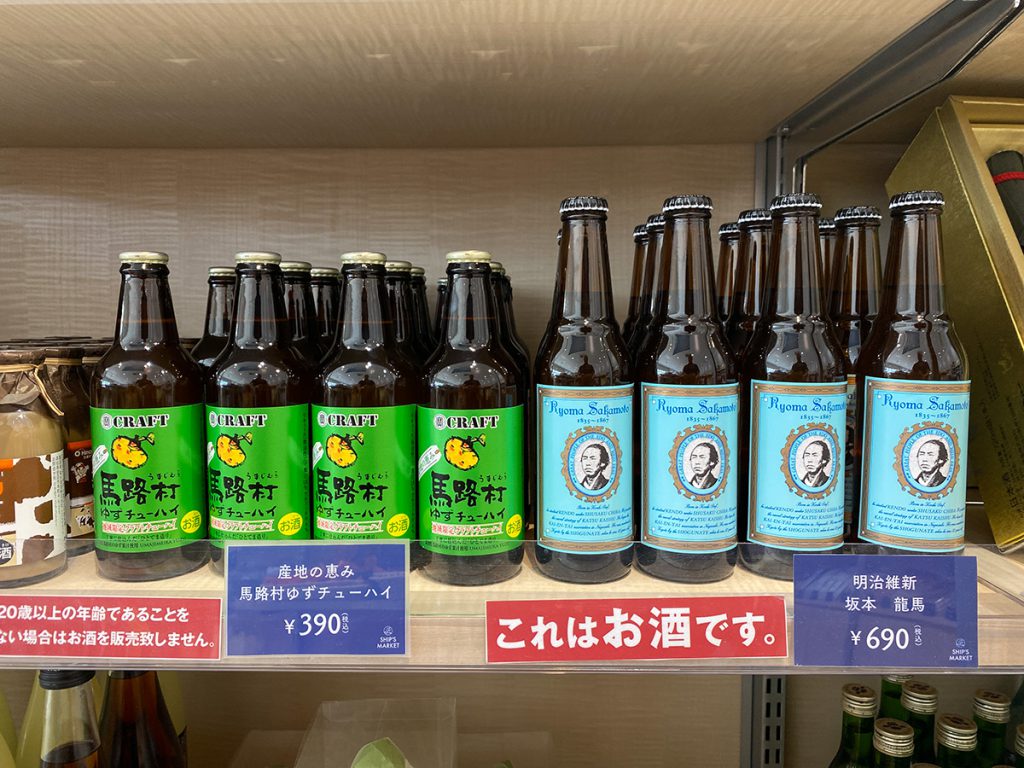
The museum presents its material well and it should provide an adequate account of Ryoma’s intriguing history. For diehard fans who can’t get enough, the Ryoma Birthplace Memorial Museum, significantly smaller in scale, is located closer to the city center. As the samurai was from a brewing family, Ryoma-themed sake and beer is ubiquitous, as are souvenir Ryoma sake cups. There is plenty for souvenir seekers at the Katsurahama Umi-no Terrace. If the hero had the ability and foresight to have copyrighted his name, his descendents would be very wealthy by now. The Ryoma theme permeates all types of products. Ryoma cappuccino? Yep. Ryoma potato chips? Covered. Ryoma burgers? Absolutely. Whatever you can come up with, his name is likely on it.
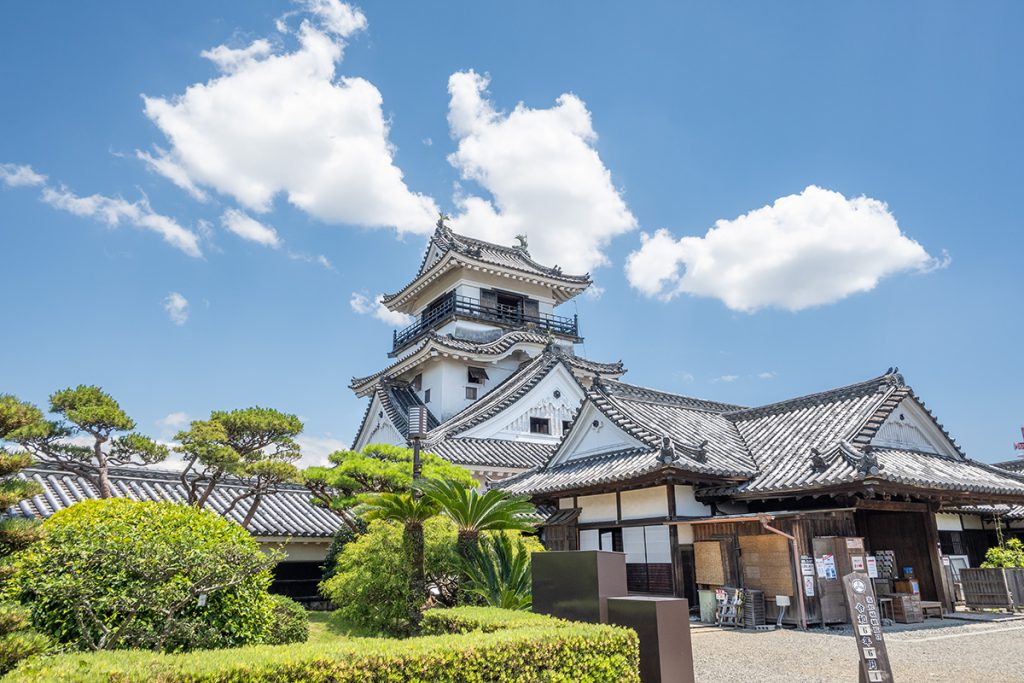
Returning to the city center, Kochi Castle gazes down on the west end of the downtown area. Its keep and main tower are in their original form, having weathered over four centuries. The castle’s construction was commissioned by Kazutoyo Yamauchi in 1601, when he took over Tosa. It’s now the centerpiece of Kochi Park and open to the public–a fact that surely would’ve made Ryoma proud. Set aside about an hour to roam around the grounds for a little exercise before an evening outing. The top floor of the castle offers a decent view of the surrounding city and mountains. Most of the castle’s treasured artifacts, however, are kept safe on display at the architecturally modern Kochi Castle Museum of History, across the street from the park entrance.
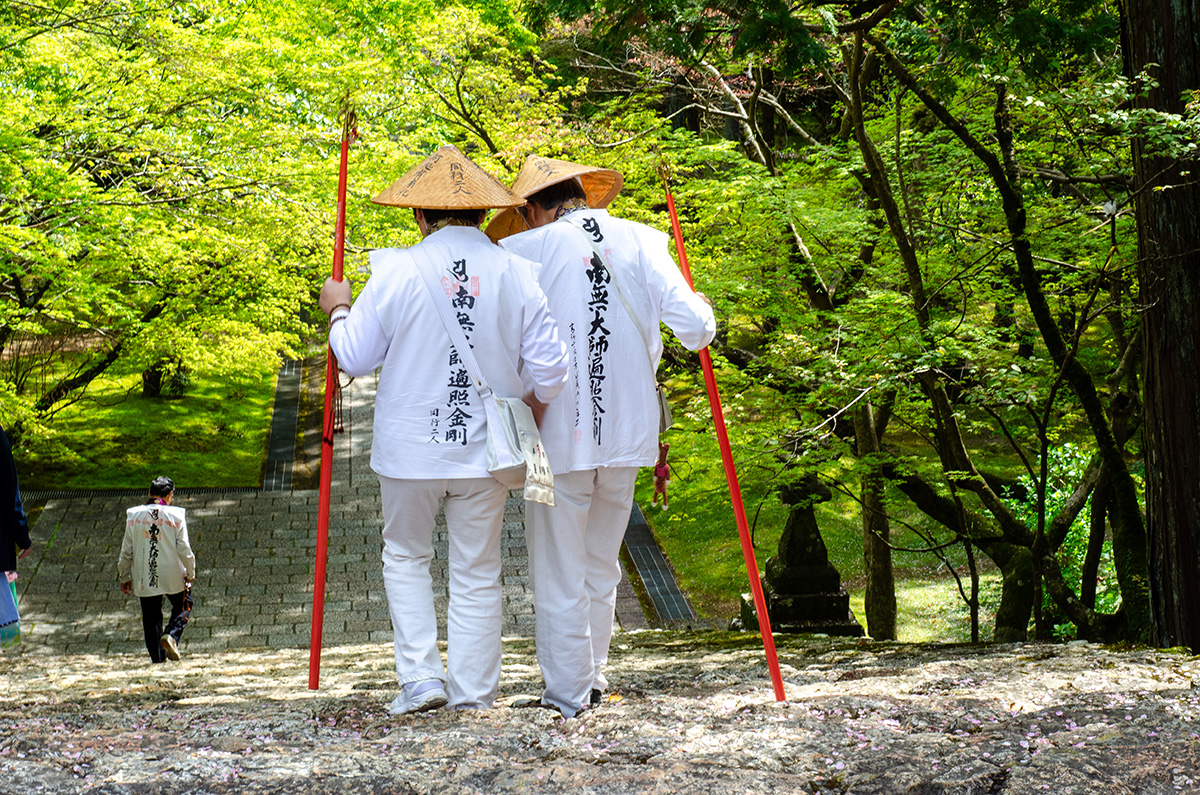
For one of the best views of the city, head to Godaisan Park, located on a 139m hill east of downtown. At the top of Godaisan you’ll find photogenic Chikurin-ji, a temple more than a thousand years old with a five-tiered pagoda. Chikurin-ji is one of the eighty-eight designated Buddhist temples of Shikoku that are part of the ohenro pilgrimage. At some point in your Kochi trip, especially here, you will likely spot ohenro-san pilgrims clad in the traditional white vests and conical straw hats with walking sticks in hand on the journey to all of the temples. Be it a search for inner peace, to see the countryside, or simply a bucket list item, I applaud their efforts. As a writer for a beer magazine with only a few days allotted, bar pilgrimages and epicurean adventure were more in line with my mission.
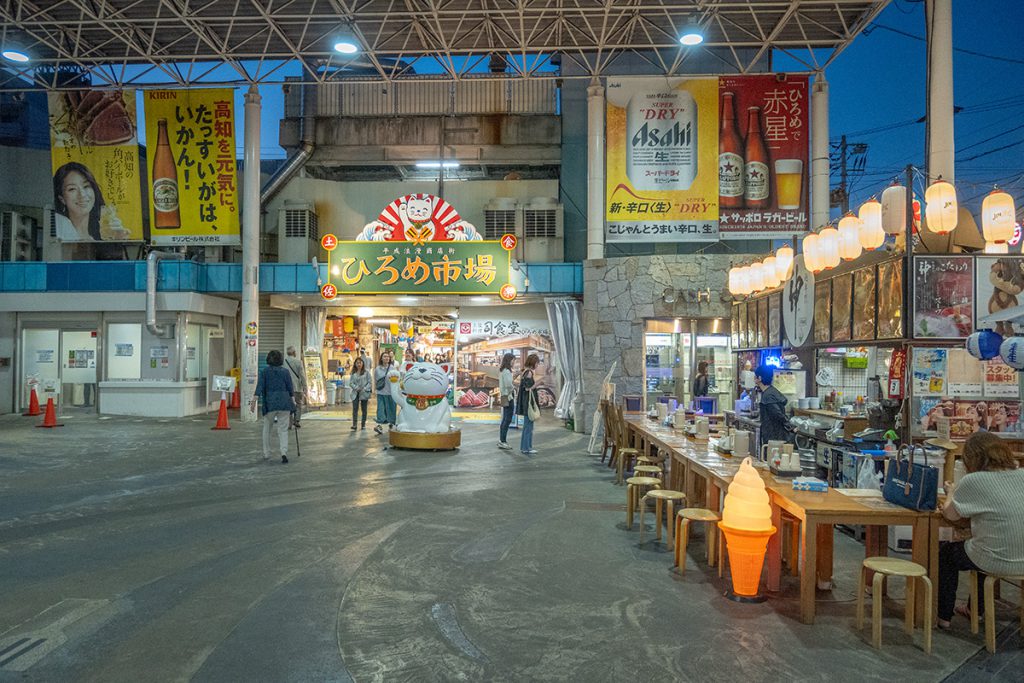
Hirome Market, a couple blocks from Kochi Castle, is a great place to kick off such an undertaking. This roofed marketplace houses around sixty small food stalls and drinking establishments specializing in the gourmet delights of the prefecture. The majority of the food court-style seating is in the center of the marketplace and consists of wooden first-come, first-served tables and benches. The atmosphere is always lively and strangers sitting at the same table may soon be newfound drinking pals.
Katsuo tataki (seared bonito tuna) is easily Kochi’s most popular delicacy. In Hirome Market there are plenty of vendors selling it, some roasting skewered chunks of the fish over open flames fed by handfuls of straw in front of your eyes. Coated with a dash of coarse salt, raw onion slices, and dried garlic chips, it makes for a great accompaniment to a crisp lager or a light, dry sake–Kochi’s preferred style. Other fine local cuisine choices to go with these libations include utsubo no karaage (fried moray chunks), aonori (green laver) tempura, imoten (deep-fried sweet potato morsels), and whale sashimi or fried whale for bolder diners.
Significantly outnumbering craft beer producers (five at current count), eighteen sake breweries call Kochi home, including heavyweights Suigei and Tsukasabotan. The former has a swank new brewery/shop (called Suigei Toas-gura) that offers tours and tastings. It’s about a forty-minute drive from downtown Kochi, but worth a visit for fans of the brand. However, you need not leave downtown for a wonderful sake experience. Tosa Shu Bar, one street off the main Obiyamachi arcade, boasts an impressive lineup of around one-hundred sake selections from all eighteen of Kochi’s breweries. Overwhelmed by the choices? Just try one of the three sake tasting sets that best matches your preference. Completing the experience is a variety of tasty appetizers designed for pairing with sake. Umasushi, a couple doors down from Tosa Shu Bar, is an elegant bar that places a heavy emphasis on fresh local seafood, Tosa duck, seasonal Kochi sake, and natural wine. This accommodating, high-end sushi bar offers an exquisite omakase course (res. req’d) for the full pampering experience.
If you are looking for craft beer, try Kochi Beer Laboratory in a back alley of the Obiyamachi area. It’s a cozy, counter-only bar pouring from five taps, usually some of those being Shikoku-brewed craft. Irish Pub Amontillado is another option in the vicinity, under the shelter of the covered arcade. Of course they serve draught Guinness, but also have five taps of craft beer and a fridge of import cans and bottles to choose from. The food menu is varied, though not so Irish, consisting of steak, pizza, pasta, and more. If you have the time, I do recommend an afternoon visit to South Horizon Brewing (see feature this issue), though you will need a taxi or a designated driver for the twenty-minute ride (the bus isn’t a great option). My main purpose was to try the beer, but non-drinkers will be more than satisfied with the upscale cuisine, home-roasted coffee, and spacious patio with plenty of outdoor seating and room to roam.
The image of Kochi people as lovers of partying that goes deep into the night is, I have discovered, well founded. Visitors to the city will be warmly encouraged to follow suit. I have been playfully frowned at for merely suggesting that I may be jumping off the party train at ‘only’ the third stop of the night. When it is time to truly close out the evening, Yatai Yasubee is the perfect spot (last order in the 2:30am range). Yasubei is a no frills pavilion in a parking lot with food stalls and simple stool seating. It’s inexpensive and usually hopping every night of the week. The specialty here is crispy fried gyoza, but you can also get ramen or oden to go with sake or standard 500ml bottles of beer.
To fully enjoy a visit to Kochi, hit the town during one of its major events. In the beginning of March the city hosts the Tosa no Okyaku, a week-long street party celebrating Kochi’s food and drink culture. Lines of tables are set up under the Obiyamachi covered arcade transforming it into one massive banquet hall. As would be expected for a town known for its drinking prowess, the over-the-top, naked mascot of the festival, appropriately named Berobero no Kamisama (God of Drunkards), presides over the event. Under the deity’s watchful eye, new friendships will be forged and guests are encouraged to exchange sake cups with the intention of meeting again at future events. Expect a wild time.
The Yosakoi Matsuri, held around the second week of August, is somewhat less drinking-focused, but still a major street party. A parade of dance teams clad in colorful happi or yukata take to the streets to perform to the tune of the traditional Tosa folk song Yosakoi Bushi.
Originating in Kochi in the 1950s, the energetic festival has spread to other cities throughout Japan and even internationally. Food stalls offering the standard festival fare line the dance route, and as you would expect, parties follow in the evening.
I would be remiss not to mention that Kochi Prefecture offers quite a bit on the nature side and its capital city serves as a suitable starting point for excursions into the vast countryside (car or bicycle required). The pristine, blue-tinged Niyodo River, slicing through the prefecture west of the capital, is an excellent destination for rejuvenation among the greenery. A day of hiking, kayaking, SUP, or canyoning along the river and its tributaries upstream is a great way to burn some calories to earn your next few beers. The Yasui and Nakatsu Gorge areas should be on your list for these outdoor activities–both have camping and guesthouse options for a quiet overnight outside of the city. Of special interest to our readers, Mukai Craft’s Blue Brew taproom is in the Nakatsu Gorge area and conveniently near campgrounds. Owner/brewer Ken Mukai is a Japanese-American who relocated with his wife Masako from Los Angeles, where they were both teachers. As stated humorously on their website, “Ken’s hobby was homebrewing, and Masako’s hobby was drinking Ken’s homebrew.” The clean mountain water that feeds your river fun also feeds Mukai’s beers. Niyodo Adventure runs canyoning and packrafting (light-weight inflatable kayaks that can be thrown in a backpack) tours in the same area as the taproom, making it easy to combine your outing with a few otsukaresama craft beers.For recommendations beyond what I’ve touched on here, the prefecture’s well-produced official tourism website (visitkochijapan.com) provides a plethora of useful information in English, Chinese, Korean, and Thai. You might also consider simply asking one of your friendly neighbors at Hirome Market for their advice. Don’t be surprised if you end up with a few local “guides” accompanying you to your next drinking establishment. Before you know it, you will be an honorary Kochi-ke (Kochi family) member with future trips planned to reunite with your new brothers and sisters..