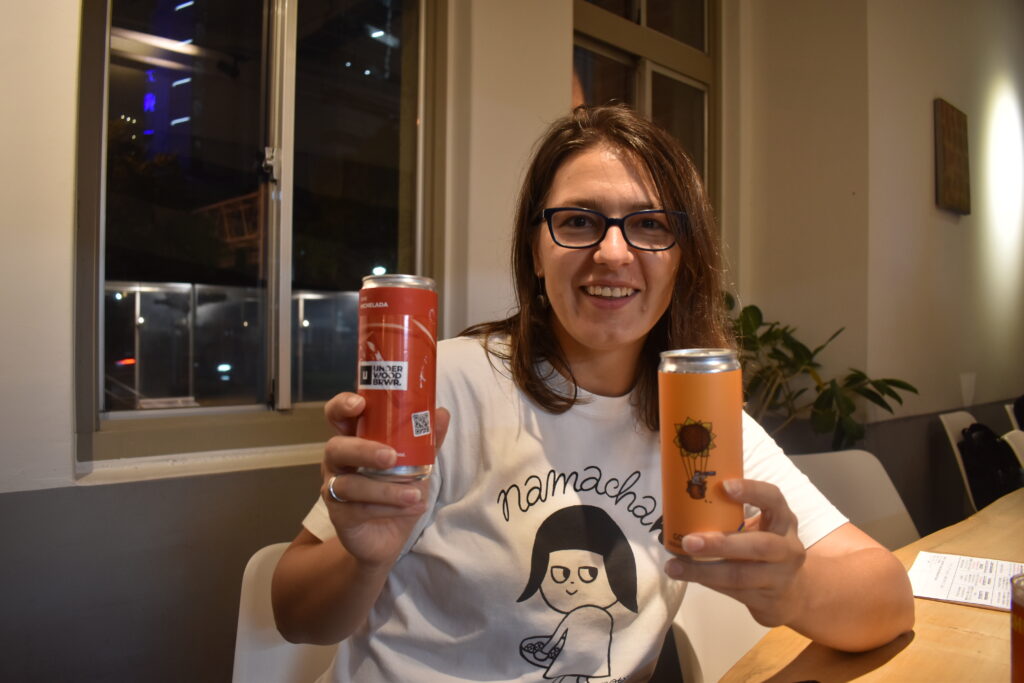

Lana Svitankova is the Ukrainian beer judge and advocate. If you have any questions about the style, please feel free to contact her at lana.svitankova@gmail.com, or if you decide to brew it, let her know, so she can add it to the map bit.ly/UGA_map
Beer styles are in abundance. Like the ocean, they ebb and flow in and out of fashion. They emerge from the depths or sink into the dark abyss of obscurity forever. Some are old, some are new. Some are fads that pass, some are here to stay (Forever? We’ll never know). But every now and then new ones–albeit from the same expanse–appear on the shore: local styles. More often than not, they come from countries that don’t have centuries-old brewing traditions and are not bound by constraints of any established preferences or expectations. More often than not, they are riffs on existing styles with a hefty seasoning of a local culture. They are inspired but have their own identity. They are, at first, only known by locals and adhere to their own style guidelines–styles like Catarina Sour, Dorada Pampeana, Italian Pilsner, Sake Beer, or Ukrainian Golden Ale.
Being a newcomer in a world of established styles is always awkward. You have to fight claims of impostor syndrome to prove that you are not simply a badly brewed classical style, that you have a right to exist and bear a name of your own. What makes you special? A distinct, never used before technique? An indigenous, ‘unknown’ ingredient? Locally bred and grown hops? If you can claim none of these, you may be screwed. That’s the case with the Ukrainian Golden Ale. We already have Belgian Strong Golden Ale, British Golden Ale, and a Golden Ale that sometimes describes American Blonde. How does the Ukrainian one differ?
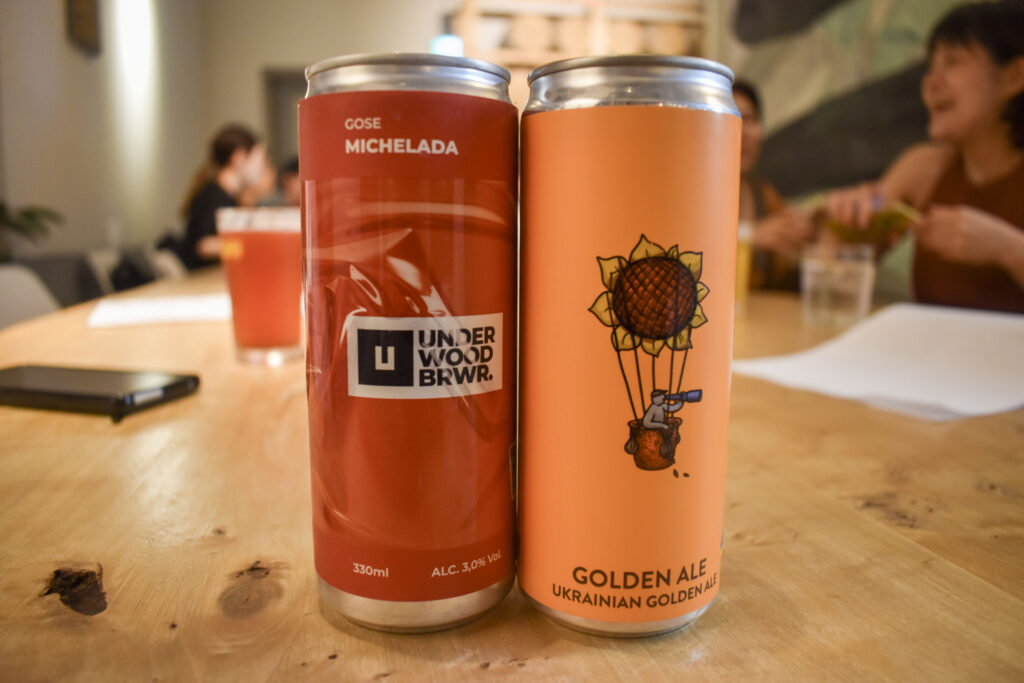
Let me provide a step-by-step guide. First brewed in a brewpub in Donetsk in 2009, it was indeed inspired by a trip to Belgium by a Ukrainian brewer who had strictly adhered to Reinheitsgebot. Since he wasn’t fully won over by the song of the Belgian siren, he refused to add sugar to his beer, using a 100% grain bill instead. The beer thus had a sweet finish and fuller body, and its ABV was relatively high (around 7%), but that was still on the lower end of strength compared to its crisp, dry Belgian counterparts. It had no phenols either. It was much stronger than the British Golden Ale. It also contained coriander, one of Ukraine’s export products, which is even used in those Belgian Ales! Mind you, the beer wasn’t named “Ukrainian” then (remember the impostor syndrome?). It was just a Golden Ale. It might have continued its unassuming existence in that three-storied restaurant, unknown to most of the rest of the country, if Russia hadn’t occupied Donetsk in 2014.
The owner and the brewer both had to flee the city, leaving their cherished project behind and parting ways. One established a new brewery in Kyiv, and the other went to work at a brewery in Dnipro. But both took that “Golden Ale” concept with them and started brewing it at new locations. Bit by bit it gained a following at the local festivals and other breweries took notice. What’s not to like about a strongish beer with a sweet malty finish, low bitterness, and fruity aroma? It doesn’t impress beer geeks, though; they deem it boring and lacking a ‘wow factor’. But this very approachability makes it a perfect stepping stone into the world of craft beer for newbies. It doesn’t slap their taste buds with bitterness, there’s no onslaught of alcohol, no bewildering kaleidoscope of flavorings. This same approachability made it invisible on the international scene since you don’t bring a beer like this to a craft beer gathering or a festival, where breweries often boast their hoppiest, most colorful, most exciting offerings.
So for a while, Ukrainian Golden Ale was an obscure local style, known only in its homeland, but people drank a lot of it! By the most conservative estimates, Ukrainians drank 1.25 million liters of it in 2021 (despite it not being the best year for beer and hospitality). Since it didn’t disappear or fall out of drinking circles, industry people began to warm up to the idea of having it defined and recognized as a local style. After all, it doesn’t taste like anything else, even if it doesn’t have uniquely Ukrainian ingredients. But how do you get a new beer style recognized? Obviously, you try to establish official guidelines, but before that, you need to prove it exists and take it to the global scene. This was when Ukrainian brewers started arranging international collabs and beer enthusiasts began bringing it to other breweries as a souvenir during the travels. Very slowly–because it’s the best and the worst time to promote anything Ukrainian right now–it got onto the Untappd (beer app) style list and European Beer Consumers Union style guidelines. It’s been brewed on nearly every continent on Earth as of this past summer. Importantly, it’s not a political statement; it’s a wish to be part of the global beer family, to bring something of our own, to tell a small part of the whole story of an amazing drink.
What exactly are the parameters of a Ukrainian Golden Ale? The grist consists mostly of pale malts (wheat malt and caramel malts can be added to reach the signature sweet malty finish). The hop choice for 15-30 IBUs is mostly traditional bittering hops, with an optional light touch of newer varieties for moderately fruity aroma. Yeast is neutral or very restrained: US-05, S33, or a mix of two. Coriander seeds often find their way in, too.
The Ukrainian Golden Ale is one of a number of exciting local styles popping up around the globe, all of which are brimming with hope for formal recognition. Let’s admit it, we all love beer for its staggering variety. The more, the better!