



Matsuyama, the capital of Ehime Prefecture and the most populous city on the island of Shikoku, is a great destination for sightseeing, lessons in history, and culinary adventure. The city boasts Japan’s oldest onsen and one of its best preserved castles. Matsuyama was also home to some of Japan’s literary giants. Ehime as a whole is rich in natural beauty and is blessed with a mild climate common to the region. Its location at the nexus of the Seto Inland Sea and the Pacific makes it a source for a varied selection of seafood, too.
Among its many regional specialties, it is most well-known for its abundance of citrus fruits. Surely, if you ask folks in Japan what comes to their mind when they think of Ehime, most will answer mikan (mandarin oranges). In addition, the prefecture leads Japan in tai (sea bream) harvest and the fish is ubiquitous on restaurant menus. Ehime has a strong reputation for gourmet cuisine due to its geography and Matsuyama is easily the best spot to try a little of everything all in one place.
A visit to Matsuyama Castle is a good way to kick off your excursion. The keep stands atop 132-meter Mount Katsuyama overlooking the center of the downtown area. It’s one of only twelve existing castles in Japan considered to be in their original state (post-Edo era). As such a historical landmark, 21 governmentally designated Important Cultural Properties are housed within the castle. Beyond its cultural significance, the area surrounding the castle also provides fantastic vantage points of the surrounding landscape. The top floor of the castle tower treats you to a 360-degree view of Matsuyama, extending out toward the Seto Inland Sea. During cherry blossom season, the courtyard is awash in vivid pink and is illuminated at night, making for spectacular photos. If you want to build up some hunger in preparation for the Matsuyama gourmet food that follows, you can walk for about twenty to thirty minutes from each castle entrance at the mountain’s base. There is also a convenient ropeway and, additionally, an open chairlift that whisks you to the top in scant minutes.
Hungry yet? Head to Okaido, the large shopping arcade just southeast of Mount Katsuyama. Along the way and in Okaido itself there are many restaurants where you can enjoy Ehime and Matsuyama gourmet specialties, so you won’t be lacking in choices for a meal. Taimeshi (sea bream on a bed of rice) is one of those that is a nationally famous delicacy. There are actually two types of this dish in Ehime. Uwajima taimeshi is sea bream sashimi marinated in dashi soy sauce topped with a beaten raw egg and other seasonings. Matsuyama taimeshi (also known as Hojo taimeshi), on the other hand, is grilled sea bream (usually whole) cooked together with rice in kombu dashi (kelp soup stock). The texture and flavor of the raw sea bream compared to the cooked variety are completely different, so be sure to try both during your stay. Take note that most of the specialty restaurants will close once they run out of tai. At Matsuyama Taimeshi Akiyoshi, which has two locations, one in the Okaido area and the other near Dogo Onsen, you can kill two birds with one stone as they serve both types of taimeshi mentioned above. In addition to those specialty items, they also have local Ehime dishes such as jakoten (deep fried fish cake) and senzangi (fried chicken on the bone). If you are searching for a nice cafe, try New York-style coffee shop Amanda Coffee’s, which has a store in Okaido as well as two other locations in Matsuyama City. The Okaido cafe has a bright, spacious interior. It makes for a great place to relax while planning out your day. The drink menu is extensive and from the food menu I suggest trying a Setouchi tai katsu (cutlet) burger, of course made with local sea bream.
Nabeyaki udon is another must-try Matsuyama soul food. It’s a simple but colorful dish containing sweet and savory seasoned beef, fried Japanese fish cake, green onions, and fried tofu. Matsuyama’s nabeyaki udon is characterized by its sweet soup stock, which may come as a surprise when trying it for the first time. The soup’s flavor has a depth that goes well with the soft udon noodles and other ingredients. Add shichimi (ground chili pepper) for a little extra spicy accent. Nabeyaki udon is generally a winter dish elsewhere in Japan, but it is served year-round in Matsuyama. The city has several specialty restaurants for the dish. Nabeyaki Udon Asahi, a local favorite since opening in 1947, is one of the most highly recommended, and rightfully so. Up on removing the lid of the piping hot udon noodles served in an aluminum pot, the steam carrying the pleasant aromatics of the soup stock will have your mouth watering. Regular customers almost always add a side dish of the restaurant’s inarizushi (sweet sushi rice wrapped in fried tofu) for its flavor as much as nostalgia.
Explaining the changes in Matsuyama tourism over the years, Asahi’s fourth-generation proprietor Tetsuko Kawasaki says, “In the past, sightseeing in Matsuyama meant going to Dogo Onsen in groups followed by enkai (group banquet). Since Botchan Stadium was built in 2000, the number of tourists visiting on their own has increased. Also, we have seen a surge in the number of people interested in visiting restaurants frequented by locals.” There is usually a long line when Asahi opens at 10am. The noodles may sell out as early as 1pm. The restaurant is located near the southern end of the Okaido arcade just off of the Gintengai shopping street.
Botchan Stadium, mentioned by Ms. Kawasaki, is the nickname for the Matsuyama Central Park Baseball Stadium, named after renowned author Natsume Soseki’s novel Botchan. Soseki was assigned to Matsuyama as an English teacher in 1895. His experiences living there led him to choose Ehime as the setting for his novel. Matsuyama is also the birthplace of influential poet Masaoka Shiki, a titan in the evolution of modern haiku. Masaoka was the same age as Soseki and the two became friends prior to Soseki relocating to Matsuyama. Because of the city’s ties to these prominent literary figures and their works, Matsuyama is known as the “City of Literature”.
In further support of the city’s nickname, Ryotaro Shiba’s historical novel Saka no Ue no Kumo (Clouds Above the Hill), features haiku master Masaoka and brothers Yoshifuru and Saneyuki Akiyama, who were military heroes (in the Russo-Japanese War) and also Matsuyama locals. The story depicts their lives during Meiji-era Japan as the country strives to modernize. The eight-volume work (published 1968–1972) went on to become a TV series running three years on NHK beginning in 2009. Fans can dive deeper into the Meiji period and the trio’s story at the Saka no Ue no Kumo Museum. Continue along your journey of history and arts to Bansuiso, in the park just behind the museum. The French-inspired, neo-Renaissance villa was built in 1922 at the behest of Count Sadakoto Hisamatsu, a nobleman and Army Lieutenant General. The count’s residence is now designated by the government’s Agency for Cultural Affairs as a National Important Cultural Property. It additionally functions as a place for exhibiting paintings and haiku, and regularly hosts concerts.
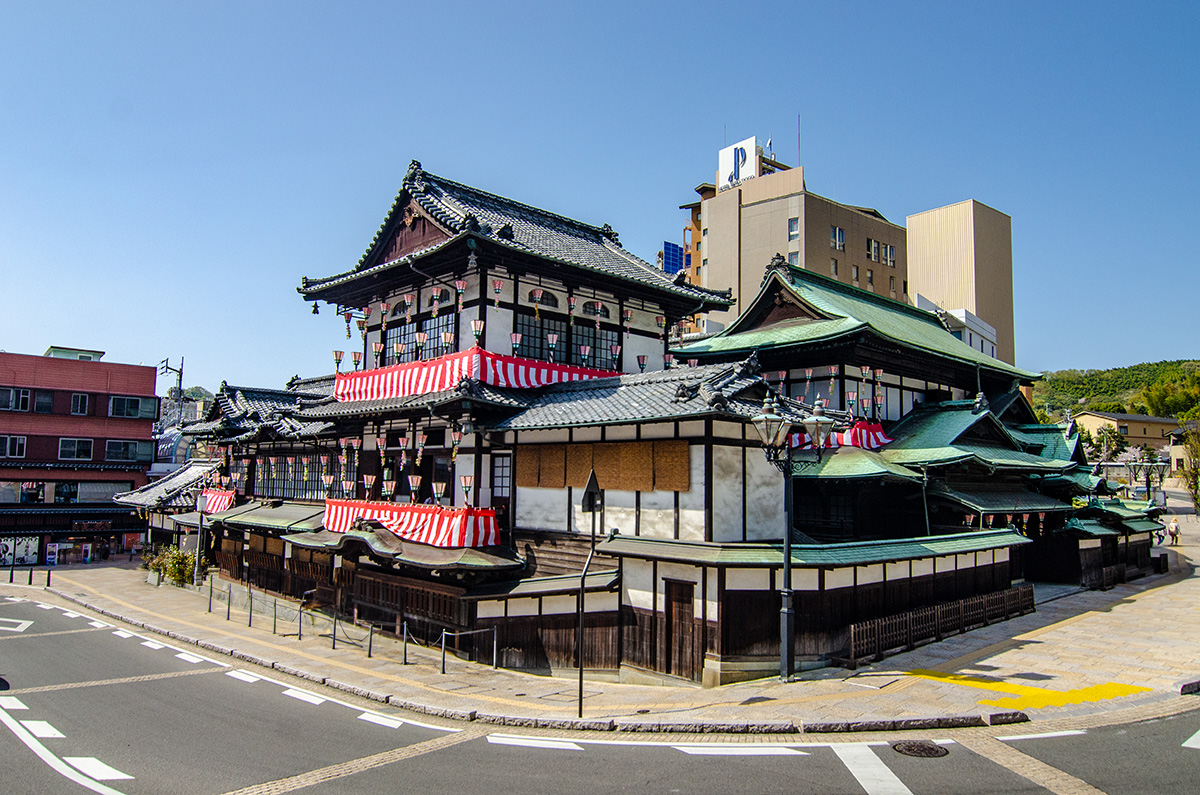
While the Okaido area is full of things to see, the wider city has much more to offer. Dogo Onsen is a must-visit stop during your Matsuyama outing. As alluded to at the beginning of this article, it is said to be Japan’s oldest hot spring facility. The main public bathhouse (currently undergoing renovation, but open) dates back to 1894, though the springs have over a millennia of history. Soseki was known to be a frequent bather and, likewise, the fictitious Botchan. The Dogo area is easily accessible from the city center, taking about fifteen minutes by tram from Okaido. The popular tourist destination sees more than 680,000 visitors annually. Dogo Haikara Dori, the street that runs from the tram station to Dogo Onsen’s main building, is lined with restaurants and souvenir shops. Here you can experience the atmosphere typical of a hot spring town, with people staying at nearby accommodations wandering around in yukata (light kimono). In addition to the main building, which has been designated as a National Important Cultural Property, there are two other alluring locations, Tsubaki-no-Yu and Asuka-no-Yu, each offering a different concept in design and bathing.
After you’ve warmed up in the hot springs, you’ll probably feel like drinking some cold beers. Fortunately, Matsuyama is home to a number of craft beer breweries and bars. Dogo Bakushukan (beer house) is the closest to the famous onsen and makes for an easy post-bath stop. It offers beers with names honoring Natsume Soseki, such as Botchan Beer (a kölsch) and Soseki Beer (a stout), as well as fruit ales, of course using Ehime fruit. Beers are also available as takeout, if you want to stroll around in your yukata with a beer.
DD4D Brewing & Clothing Store is located downtown in the middle of all the action. The Yamanouchi family opened it initially as an apparel shop in 1998. In 2019, Keita Yamanouchi returned from Tokyo, where he had been working at Y.Y.G. Brewery, to help out with the family business by starting a brewery. The taproom and brewing space is at the back of the store behind the clothing racks, creating a unique atmosphere. DD4D’s head brewer, Mike Donohue, hails from Philadelphia. He is currently brewing once or twice weekly churning out forty to fifty new releases in a year.
Bokke Craft Beer is another great stop on the Matsuyama craft beer trail. Craft brews from all over the country flow from seven taps. Cans and bottles are also available. The menu has some truly delicious food to go with your beer, including marinated avocado and octopus, garlic butter oysters with mushrooms, and fried chicken wings. Bokke is often packed with regulars, even on weekdays. Start up a conversation with the amicable owner Kazutaka Sawamura, if you can catch him when he has some down time.
When asking Matsuyama locals about craft beer, almost all of them suggest a visit to Gogoshima Beer Farm. The brewery, which opened in 2022 in a renovated, 150-year-old traditional house, is located on the island of Gogoshima. While it’s still technically part of the city, it requires about a 15-minute ferry ride from Matsuyama’s Takahama Port, which is already about 50 minutes by train from downtown. The brewery produces brews using the island’s specialty citrus fruits as well as Ehime-grown rice. The taproom is only open Friday through Sunday, and additionally holidays, so plan your visit accordingly. Gogoshima’s scenic natural beauty is a departure from the bustle of downtown Matsuyama, making it well worth the trip. In the summer it is also a popular swimming spot.
The craft beer joints introduced here are just some of those located in Matsuyama. These days it seems there’s always a new one popping up somewhere, so we’ll leave it to you to explore further. Combine that search with a gourmet cuisine tour, a soothing dip in historical hot springs, and an educational journey through the City of Literature’s past, and you have the makings of an excellent itinerary. On the fence about where to go for your next holiday? Matsuyama beckons.