



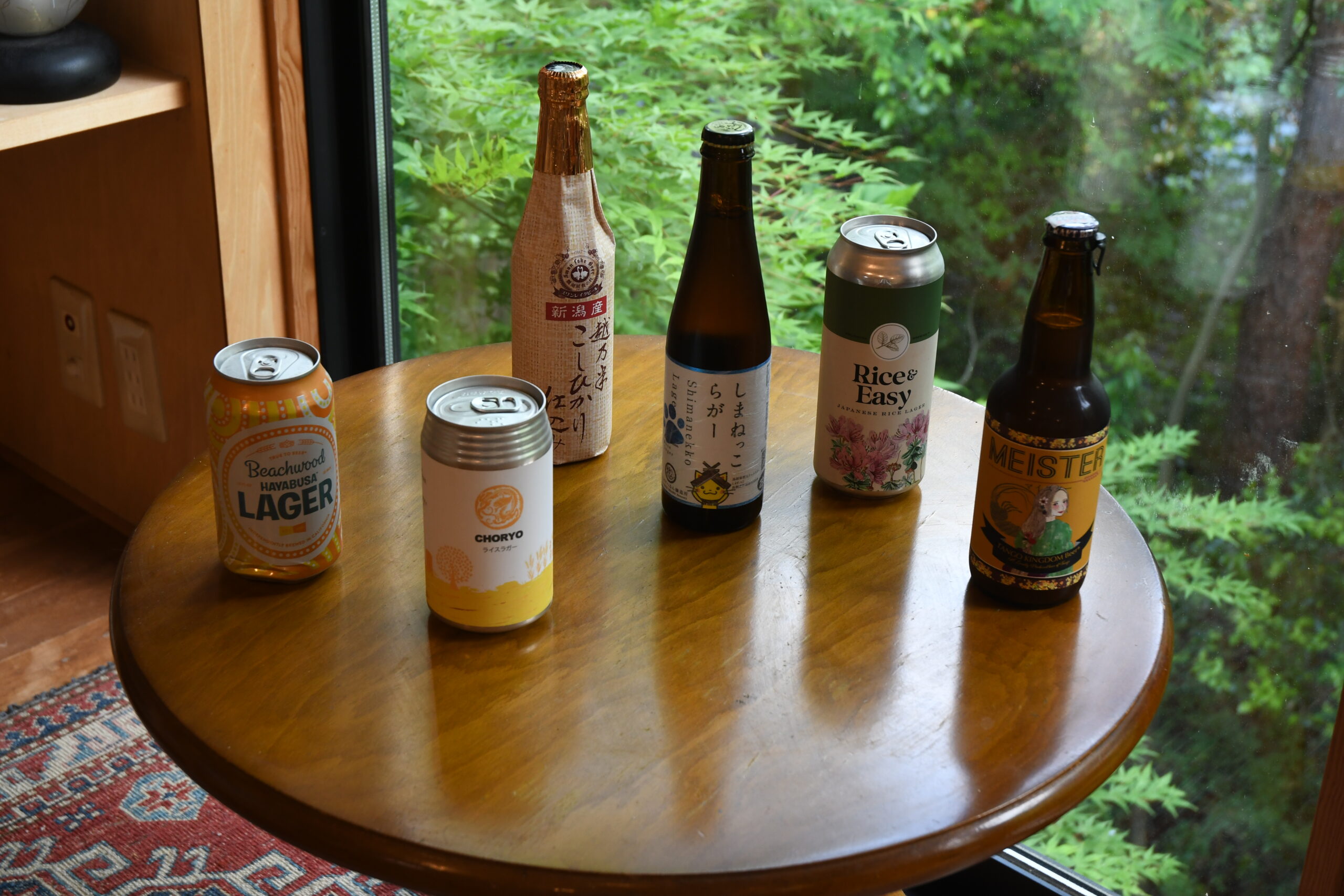
A “new” style of craft beer has been gaining attention in the US over the past year or so, and, as with most trends in US craft, it is now entering the world of Japanese craft beer. It’s called the “Japanese Rice Lager”. What? Come again? A “Japanese” lager is entering Japan from the US? Alas, the name is a bit confusing, but it refers to a pale lager that includes rice in the mash bill to make the body of the beer light and crisp, or even “crispy / crispi”. Sometimes these beers also contain yuzu, green tea, or some other kind of “Japanese” ingredient.
Let’s get one thing clear from the beginning: there is little that is essentially Japanese about these beers. Rice has actually been used in brewing beer in the US longer than in Japan. Budweiser, the “King of Beers”, has included rice in its recipe since the 1860s. The story has been related by Maureen Ogle in her 2006 history of American beer, Ambitious Brew. Reasons for using rice were twofold. First of all, the six-row barley that grew best in American soil had too much protein in it, which caused the beer to become hazy. Adding rice or corn tended to correct this trait (although today such haze would certainly be welcomed). The second reason is that Americans found the lagers that German immigrants started brewing in the US to be too heavy. Food was often in short supply in 19th century Europe, so there, beer was seen as an important source of calories. In America, however, food was abundant. Americans wanted lighter, more refreshing beers to go with their steaks and sausages, as opposed to the “liquid bread” of Europe. Brewing with rice is less of a challenge than using corn, so rice became more popular at first.
In contrast to the American scene, most Japanese brewers stuck to pure German recipes well into the 20th century, even though they were technically allowed to use rice and other adjuncts. One reason for that was a conservative attachment to tradition, no doubt, but another is also self-evident: rice was the staple food of choice for the Japanese nation, a food packed full of symbolism, and yet one that was often in short supply. When there was any rice surplus, moreover, sake brewers had first dibs. Food shortages during and following the Pacific War ensured that little precious rice would be used in Japanese beer until the nation had fully recovered, although various other adjuncts were indeed used. In Brewed in Japan (2013), Jeffrey Alexander argues that lighter, crisper beer, with more adjuncts, became the beer of choice after the end of the war. People had gotten used to beer brewed under strict malt rationing, so from that point on, all-malt lagers became almost as rare in Japan as they were in the US.
Yet still we hear of the “Japanese Rice Lager”. Well, Japan is cool these days, and rice is something people associate with Japan, so it would seem that slapping that label on your beer helps with the marketing. American brewers who wish to defend the use of the term tend to point to Asahi Super Dry, which does indeed use rice to lighten its body–alongside corn, sugar, and starch! Quite honestly, Japanese Rice Lagers as made by craft brewers in America today are not so much like Super Dry, or Sapporo Black Label, as they are closer to American pilsners or IPLs. Many are hopped well. They just happen to be light and crisp.
To complicate things further, Japanese craft breweries have been making rice lagers for years. Many of these hail from Niigata, that haven of rice, home of Japan’s favorite variety, Koshihikari. Koshihikari lagers are brewed by Swan Lake, Echigo, and Gotemba Kogen, while Koshihikari ales have been made by Kujukuri Ocean, Hakusan Waku Waku, Echizen Fukui, and Michinoku Fukushima breweries. The quality of these beers varies, as most were designed more as “omiyage” beers, featuring a local agricultural product, than as something for the serious craft drinker.
Swan Lake’s Koshihikari Shikomi, brewed since 1998, also started out as such a novelty, at a time when rice was generally considered verboten in craft brewing. Yet this Japanese rice lager has long stood out above the crowd as light and crisp, yet flavorful. It is mellow and rounded, with a light rice aroma and a dry finish. It is also well-hopped with Saaz, which adds a citrusy, spicy character that ties everything together. While not Japanese rice lagers, we should also remember that Shiga Kogen (Tamamura Honten, Engi sake brand) uses its Miyama Nishiki sake rice in several of its saisons and IPAs, and Daisen G Beer (Kumezakura brewery and sake brand of the same name) uses its own sake rice in the Yago line of ales. If anyone wants an introduction to the use of rice in Japanese brewing, they should skip the industrial lagers and start with these three breweries.
Recently, more Japanese brewers have been inspired by the American version. Choryo Rice Lager is big with lemony and herbal hop aromas and a long-lasting hoppy bitterness. It is light and mellow, with a clean, crisp finish, refreshing and really easy to drink in the heat. Beer Hearn Shimanekko Rice Lager drinks like an IPL with rice. It uses Mosaic and Citra hops, which really shine, giving it a dank and fruity aroma of tropical and citrus fruits. The rounded rice sweetness is balanced by a surprisingly bitter and crisp finish that lasts a long, long time.
Some of the more popular rice lagers overseas have made it into Japan. Fieldwork Rice and Easy, which uses genmai rice, has a grainy character and light hopping, and seemed to feature the flavor of the brown rice. It too had a well-rounded body and a crisp finish. Mikkeller Japanese Rice Lager and Other Half Brewing’s Poetry Snaps are crowd favorites that have made it to Japan, though neither was available at time of writing. Mikkeller also makes a yuzu version, making it ever more Japanese. Jackie O’s Kaiju may have been the most truly “Japanese” of them all, as it used Sorachi Ace hops. Sadly, that beer has been retired.
To conclude, then, the label “Japanese Rice Lager” is something of a misnomer, but what about the style? Regarding the rice lagers available here in Japan, most felt to be more rounded and mellow, and even creamy, as opposed to “crisp”. They were for the most part lighter than all-malt lagers in the Export, Helles, or Czech styles. Somehow, however, most still could not beat a well-attenuated North German style pils for crispness. Part of the sensation is also surely due to the level of hop bitterness, which was low to medium in most of these. It seemed to me that rice lagers work best with a nicely bitter finish. The Shimanekko Rice Lager was hopped up like an IPL, both fragrant and bitter, and indeed, that was my favorite of the bunch.
So is the Japanese Rice Lager a new, more mature option for adults who want to enjoy crisp beer in the summer sun, without getting too full or too drunk? Or is it a gimmick in the age of Cool Japan, and little more than a throwback to the fizzy yellow stuff that we all rejected after our first taste of an IPA? I suppose it’s a little of both. Some of the discourse surrounding it is laughable, but on a 30°+ summer day, I’d rather reach for one of these than a hazy IPA.