



Italian Pilsner? I know what some of you are thinking: “Do you mean Nastro Azzuro or Moretti? Pilsner is Czech. Pils is German. Chianti and Campari are Italian.” I know. But not only is Italian Pilsner a real thing, it has spread far beyond Italy and is becoming more and more popular in Japan as well as the US. It just may be the perfect beer for hot weather.
I’ve written here about Czech and German Pilsners before, and also about India Pale Lagers. Generally speaking Czech Pilsners are malty and rich, with the strong aroma, flavor, and bitterness of Bohemian hops, usually Zatec (Saaz). In comparison, German Pils is more highly attenuated and lighter in body, with slightly less malt character and less hop aroma, but a stark bitterness. The hops are German noble varietals like Hallertau, Hersbrucker, Spalter, Saphir. India Pale Lagers generally use New World hops, and they always dry hop, which is not normally practiced in either Czechia or Germany (it was forbidden in Germany until 2012, as it once was in Japan, whose beer laws rely greatly upon the Bavarian Purity Law of 1516). IPLs tend to be more varied in their malt bills, often adding crystal or Munich malt for flavor or body. They also tend to be stronger than your typical Old World pilsners, which are rarely over 5% ABV. IPLs might reach 7-8%.
Italian Pilsners are closest to German Pils in malt character and in the hop varietals used. The biggest difference is that they are dry hopped. You might wonder what makes this “Italian”. The answer traces back to one path-breaking beer: Tipopils, first brewed in 1996 at Birrificio Italiano in northern Italy. Brewer Agostino Arioli was looking for a more floral, fragrant version of a pils, inspired, he says, by English cask ales being dry hopped in the cask. He ferments it at a higher temperature than is typical in Germany, which results in more fruity esters, and adds hops at flameout, as well as in primary and secondary fermentation. One notion is that dry hopping while the yeast is still active results in a deeper, smoother hop character—possibly akin to the effect of the yeast in a hazy IPA. That said, an Italian Pilsner is not aiming for the massive hoppiness of an IPA. It’s definitely hoppy—but mainly floral, spicy, and herbal, and not tropical, dank, or “juicy”. It has a more balanced, refined, and noble hop character than we are used to in IPAs or IPLs. This style should have a nice maltiness to it, but should be dry overall, with enough bitterness to make the finish crisp, but not overwhelming. This is a simple and balanced beer in which the complexity of noble hops is allowed to shine. It has been compared to the Pizza Margarita: very few ingredients, but their quality and freshness mean everything.
I have had Tipopils in Japan. Just once, and that was three or four years ago. Like most Italian craft beer, it must have proved difficult and expensive to import. Another Italian Pilsner from Italy that is sometimes available here is Birrificio del Ducato’s Viaemilia. Both are widely available in bars and beer shops in their native country, but somewhat hard to find elsewhere.
Over the past two years, however, Italian Pilsners have come to be brewed more and more around the world, including in Japan. A forerunner was Firestone Walker Pivo Hoppy Pils, released in 2012. This does not label itself “Italian”, but its creator has clearly stated that he brewed it in the style of Tipopils. To me, Pivo Pils is more lemony than most Italian Pilsners—a bit like lemon iced tea—but it’s excellent, and easy to find in Japan. Fort Point Sfizio is now also widely available here. It has a more complex hop character, I think, with notes of lemon, pine, mint and herbs, and a dry, bitter finish reminiscent of a northern German Pils. Oxbow’s Luppolo has also been spotted in Japan, though it seems only in small quantities. This one is very highly acclaimed, and definitely one to look out for. Virginia Beer Company’s Bellissimo has also recently become available, and it too is high on my list.
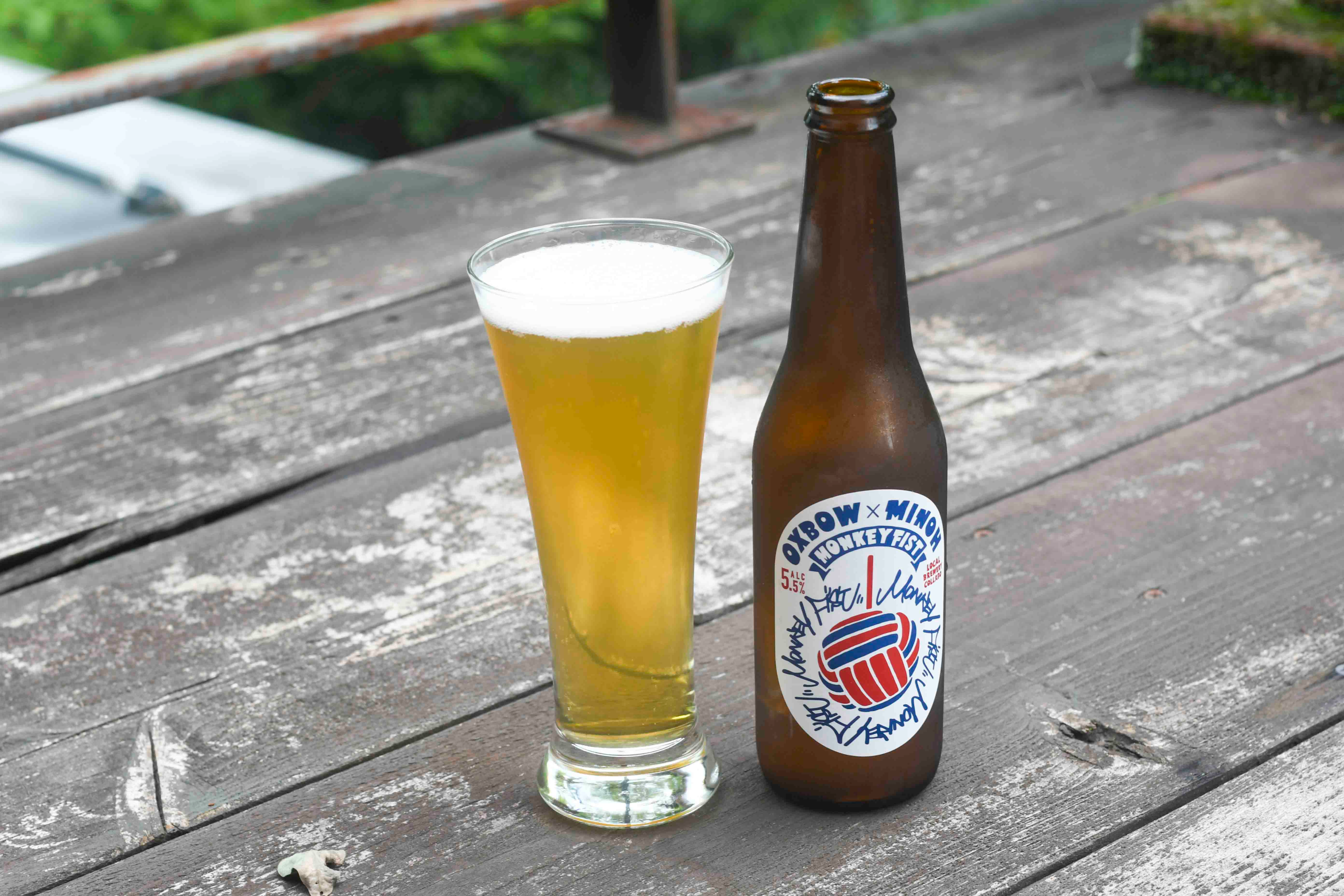
The first Italian Pilsner brewed in Japan was probably either West Coast Brewing’s No Clouds, No Problem, or the Minoh / Oxbow collaboration Monkey Fist. Each was released in the second half of 2019, and each has been made again recently. No Clouds, No Problem has a very lemony and herbal hop character from Hallertau Mittelfruh, with a honey malt character and a grainy touch. It seems well adapted to the hot Japanese summer, though these days that heat carries deep into autumn. Regardless, there’s no reason to limit yourself to seasons if you fancy a certain beer–unless you are bound by the brewery’s production.
Monkey Fist, I must admit, is probably my favorite of all the Italian Pilsners I have tried so far, primarily on account of its lovely malt character: biscuity and slightly sweet, with a full body and light apricot. The hops are subtle but complex: herbal, spicy and resiny rather than fruity and flowery. It is a bit less summery than some of the others, but a bit more mature.
And there are others. This summer you may have noticed Baeren The Day Italian Pilsner, in the electric blue can. This is their limited edition for 2021, and its wide visibility is what prompted this column. The hop character here is very fruity, floral, and herbal. It is a bit sweet for the style but finishes bitter. I supposed that this suffers from pasteurization, but it is a lovely drinker and great value to boot.
A pleasant surprise was Repubrew Pils Pils, which I discovered just in time to sample for this column. I found the hop character floral, spicy, herbal and fruity, with very crisp malt, reminiscent of saltine crackers and toasted white Italian bread. It was my favorite beer from them yet.
There are a number of other Japanese brewers who have experimented with the style. Kyoto Brewing Company launched its New Frontier Lager in 2020, and each time it is brewed, a new hop bill is used. The second in the series was an Italian Pilsner featuring Spalter hops, which gave the typical fruity, grassy, herbal notes desired in the style. This past spring, Hop Kotan released what may have been the world’s first Imperial Italian Pilsner, named Shinkyouchi. It will be interesting to discover how that method worked in a 6.5% ABV lager. DevilCraft has brewed Hellbender a number of times, which they describe as a hoppy helles, but it also was clearly influenced by the Italian Pilsner style. I’m sure there are others that I have missed during the Coronavirus pandemic.
More aromatic than a typical pilsner, more subtle and sophisticated than an IPA or IPL–Italian Pilsners might still be flying under the radar, but they are starting to make a mark. They remind me of an Italian antipasto as opposed to a plate of German sausages or American BBQ. Slightly lighter, finer, more Mediterranean.