



StAnd you may ask yourself,
“Well, how did I get here?”
—Once in a Lifetime, by Talking Heads
Thirty years of craft beer in Japan is a milestone worth reflecting on. How did we get here? How did it all begin? What can we learn for the future? It’s a wild story of broad economic liberalization, sake breweries, wedding halls and hotels, tourism endeavors, maverick entrepreneurs, dozens of German brewers, opportunity and greed, and—ultimately—perseverance. Let me recount the tale as I remember it and have researched it over the years…
ORIGINS
In the early 1990s Japan was recovering from the collapse of its economic bubble several years earlier. The government enacted sweeping liberalization measures to spark competition and revamp Japan’s economy. This affected industries from banking and telecommunications to, well, brewing. In 1994, laws governing this sector changed to allow for the issuance of a beer license if a brewery could demonstrate the means of annually brewing 60,000 liters of beer. Beer itself was defined more or less along the lines of the German tradition: containing water, malted grain, yeast, and hops. There was a second license for happōshu (to keep it simple, “beer with adjuncts” like fruit, herbs, or vegetables) that only required 6,000 liters annually. By comparison, the previous law required two-million liters, which is industrial capacity. It explains why Japan only had a small handful of industrial breweries for decades. For the Average Joe/Jiro Tanaka, opening a brewpub was not a dream; for the average consumer, there was no ‘local’.
Following these changes, the race was on for opportunity-seeking businesses across Japan to build breweries and start selling beer—because everyone likes beer, right? The first to open, in February of 1995, was Echigo Beer in Niigata. Over the next few months and years, hundreds of small breweries launched. At the time “ji-beer” (literally, “beer of the land/locale”) was the term for their products; its corresponding term in English back then was “microbrew”. Ji-beer was a riff on jizake from the sake industry. That term had been coined to describe small-scale, local sake brewed with care and craft, a boom that began in Japan in the 1970s but gained critical mass in the 1980s.
Many breweries—all of those, in fact, with happōshu licenses that required some kind of adjunct—interpreted ji-beer to mean the use of local products. They executed accordingly. Breweries typically used local fruits and herbs, sometimes vegetables, and on rare occasions more unusual items (like seafood). Those with beer licenses, meanwhile, tended to follow German brewing traditions and beer styles for reasons I explain below.
I was a student at Nanzan University, Nagoya, in 1995 and vaguely remember the appearance of ji-beer. You’d see it when you traveled to touristy areas, often available at omiyage (souvenir) stalls and kiosks. That ji-beer didn’t make an impression on me (and would not until my first job in Japan in 1997) was perhaps no surprise. Few breweries knew what they were doing back then.
Unlike America, where talented homebrewers often turned professional, home brewing was not legal in Japan (and still isn’t). Some businesses planning to open breweries sent would-be brewers overseas for crash courses that lasted a few weeks to a few months; sometimes, it was entrepreneurial-minded people who went themselves. More commonly, businesses would hire overseas help, like in the early Meiji era (late 19th century). Brewers would come to breweries for only a couple of weeks or a couple of months to train staff. Sometimes the brewers would stay and do the brewing themselves until moving on or being replaced by native Japanese staff. The go-to brewer-trainers were unsurprisingly often German, due to the legacy of that tradition. At one time in the late 90s, there were dozens of German brewers in Japan—enough that they even had their own organization for a while.
While few stayed long, their legacy nevertheless remains. An interesting piece of trivia is that Echigo’s first brewer, Markus Luczynski, is still in Japan. However, he has long since moved on to providing brewing equipment and installation through his company BET. Because of that large presence of German brewers in the early days, many Japanese brewers that learned from them brewed basic German styles. The Kölsch and the Alt were everywhere. And you’d often see Weizen on menus, too. Although American influences have largely displaced those styles today, you still see vestiges of that German influence, especially in legacy breweries.
What kind of companies were entering the game? Every kind you could imagine, including ones that should probably have stayed away. Many, if not most, were solely focused on the opportunity to profit, not on making quality beer products. Few were in it for the love of craft.
Perhaps an exception were sake breweries. They already knew how to brew, and brewing beer is not so drastically different. Crucially, they understood the importance of sanitation and quality control. Many sake breweries saw opportunity because sake is primarily a winter business (most even shutting down in warmer months), while beer sells well in the summer. As Mark Meli notes in his 2013 publication, Craft Beer in Japan: the Essential Guide, about one-fourth of the several hundred breweries in Japan were sake breweries. A great example of a sake brewery that soared to international recognition is Kiuchi Shuzō, makers of Hitachino Nest Beer. Ise Kadoya, meanwhile, is an interesting example of an adjacent business. Established in 1575, the family-owned business was at least involved in fermentation through the production of miso and soy sauce.
buy generic lyricaAnother industry with many players was tourism. Resort area operators conceived of ji-beer as a way to potentially attract visitors. There was certainly a phenomenon of what some of us in the industry called “onsen (hot springs) breweries”. Tourist-oriented farms, of which there are many across Japan, saw an opportunity to incorporate local products in their brews. Hotels entered the fray, too, though most of them were tied to the wedding industry; if you had your wedding in the attached chapel, then you could have a reception replete with ji-beer!
The first ji-beer I remember making an impression—the one that was my epiphany moment—was from Shiroyama Hotel, at the time located in Fukuoka City (it has since relocated to Sakurajima, Kagoshima). In 1997, my first job out of university was at an international center about a block away, and I keenly remember the tasty fruit and herb-infused beers. The brewer at the time, Tomoyuki Kurakake, I am happy to say, is still with the brewery and making excellent beer, though he has since branched into many other styles.
THE DARK AGES
By 1997, however, the original ji-beer boom was already going bust. The first few casualties of bankruptcy—or at least ceased operations—had already appeared and there would be well over a hundred in the years that followed.
Poor quality and inconsistency were usually the culprits. Premium prices for such products didn’t help. Why would consumers pay twice as much for beers that tasted gross, many of them with off-flavors from infections and any number of production errors? Why wouldn’t they just stick with Japan’s industrial lagers? Ji-beer earned a bad name for itself and it would take about a decade in most locales for it to shake that reputation. The Dark Ages were upon Japan’s microbrew industry.
But just as with the Dark Ages in Europe, it wasn’t as if there weren’t advancements in science and thought. Likewise, when the Heian court collapsed in Japan, shattering the society that brought us Tale of Genji and beautiful court poetry, it wasn’t as if all cultural progress came to a halt for the next few centuries. Achievement persisted beneath the bleak surface narrative.
Some breweries were lucky enough to have brewers and management that committed to study and improvement. Besides Hitachino Nest, among sake breweries you also had the likes of Shiga Kogen (Tamamura Honten) appear. Swan Lake is, to this day, connected with the wedding industry through the family business; it rose far above others of its kind and its porter is still one of my personal favorites. Harvest Moon, just outside Tokyo DisneyLand, has thrived thanks to its brewer, Tomoko Sonoda, and her achievements. And let’s not forget that Yona Yona, arguably Japan’s most successful craft brewery, emerged from resort business interests.
One of my favorite stories from the agricultural sector is Hida Takayama Beer. I visited the farm in Gifu’s rural countryside in 2011 to meet the cattle farmer-owner, Azuchi Norihisa. He said he had some idle dairy tanks and wondered if he could repurpose them for brewing, but didn’t know much about brewing. A friend at Tokyo Agricultural University (Nōdai) introduced him to a brewer named Padma from Sri Lanka, of all places, who had trained in Germany. To throw in another curveball, the two set about brewing Belgian-style beers. They were good (and still are). Padma stayed there for seven years, providing stability that most others never enjoyed.
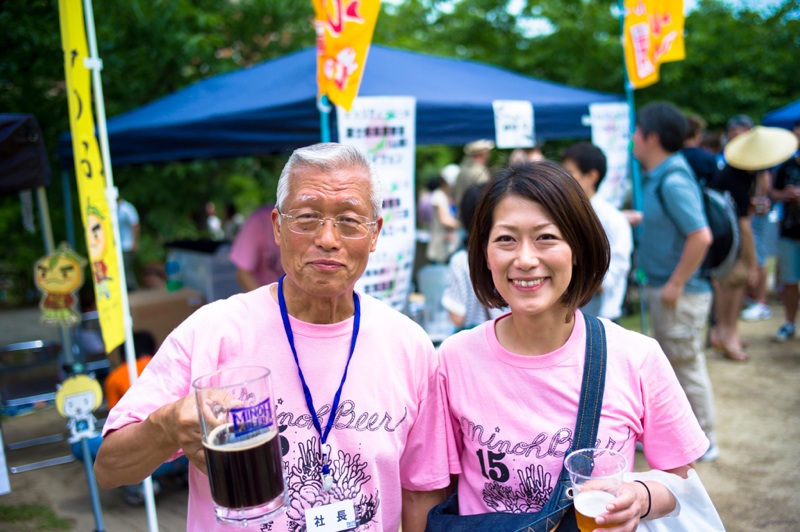
A brewery isn’t just about brewing. It’s also a business, and everyone had to figure that out. Many didn’t. A few were already tied to the alcohol industry and/or distribution so they certainly had a built-in advantage through their experience and connections. One that immediately comes to mind is Minoh Beer, launched in the late 90s. It was led by the late Masaji Oshita until 2012, when his daughter Kaori—who was the brewer—filled his shoes (Mr. Oshita was involved in the liquor retail business for several decades before setting up the brewery). But it’s not as if business acumen equates to instant success. Osaka’s consumers are famously frugal, and Minoh has had its fair share of struggles over the last three decades. The business of brewing is tough!
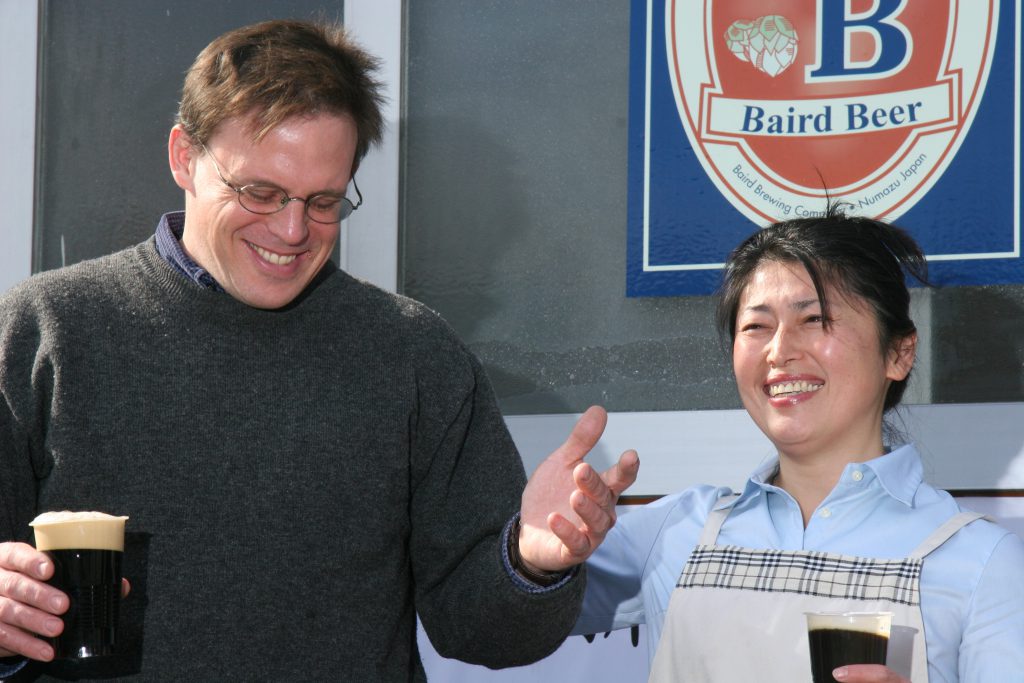
In 2001 I visited Baird Brewing in Numazu, Shizuoka, not long after it opened. Bryan Baird was one of a precious few who were marking a promising new trend: the brewer-owner-entrepreneur. Bryan didn’t have a pre-existing company that stepped into the brewing industry. He and his wife Sayuri launched Baird Brewing on their own. He didn’t hire a brewer, either; he already was one, with formal training in the U.S. and a whole lot of home brewing under his belt. Rather than chase trends or brew styles already firmly established in the market, he brewed what he, as a brewer, wanted to brew and drink. Those with this approach—and I remember Eigo Sato of Shiga Kogen Beer being another maverick—helped introduce a broader range of styles to Japan in the aughts.
Bryan was also from overseas. By the early aughts, all but a few of those early ‘helper brewers’ from the 90s had left Japan. More people would come, however, setting down their roots in Japan. In the same entrepreneurial spirit of Baird, they’d launch their own breweries and introduce aspects of their own home-country traditions.
There were two other prominent features of the aughts that drove development. One was the rise of beer bars that embraced craft beer. Craft beer-centric bars are ubiquitous these days; there are thousands across Japan. But even into the late aughts, there were only a few dozen scattered across Japan. It was, in fact, possible to visit all of them—I remember a stamp rally to that effect. These operators were mavericks in their own right, pushing premium-priced beer that most of the public still ignored. The ‘boss’ of them all was Popeye in Ryogoku, Tokyo, run by the hard-nosed Tatsuo Aoki and featuring some seventy taps. It became legendary (and Aoki, to his credit, encouraged me in 2009 to launch the Japan Beer Times). These retailers provided sales channels for breweries and were also a conduit for valuable customer feedback.
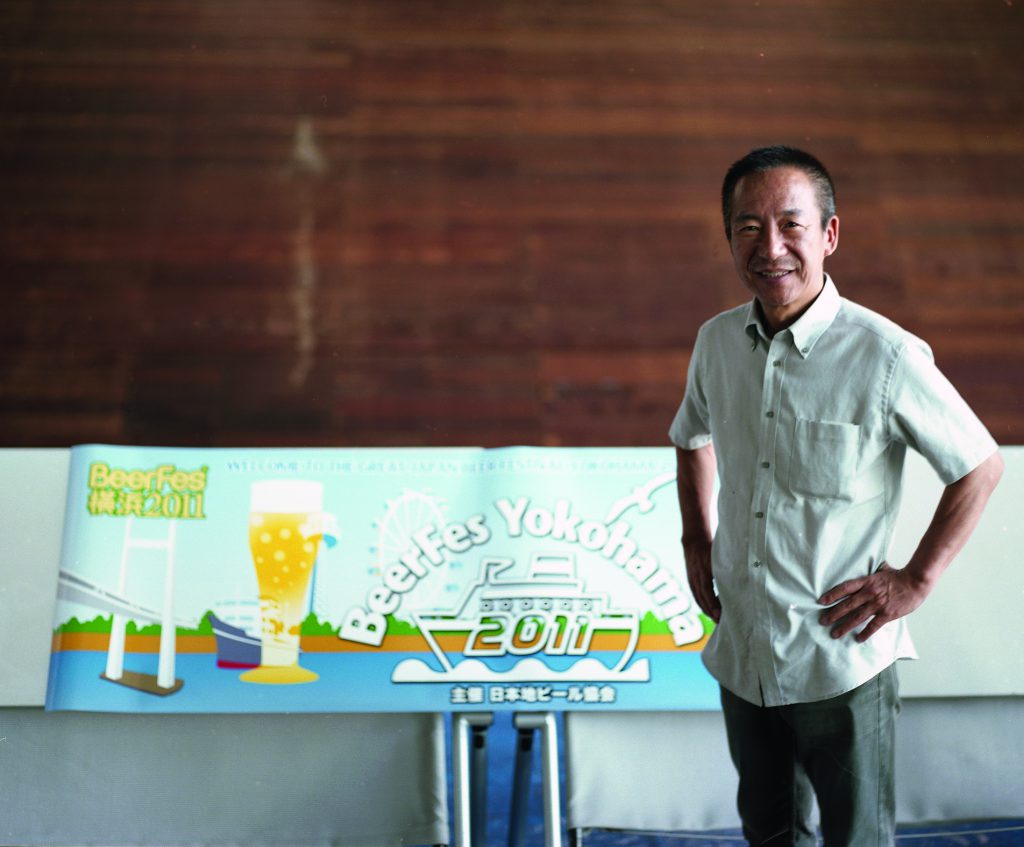
Another feature was festivals. They are everywhere today, including multiple ones on any given weekend, but in the aughts, they were a rare treat for many consumers. They took place in regional cities a few times a year. I had the honor of introducing the first issue of the Japan Beer Times at the Real Ale Festival in Tokyo in 2009—a lively affair that brought breweries, retailers, and consumers together. The late Ryoji Oda, who founded the Japan Craft Beer Association (now called Craft Beer Association), was the primary driver of such festivals, having launched the popular BeerFes festival series across Japan. They attracted thousands over the course of a year, enabling otherwise unknown breweries to be discovered by consumers and, often, retailers who scouted for new suppliers. Of note, Oda anticipated the craft beer boom, launching JCBA as early as 1995.
Some time in the aughts, the phrase “craft beer” entered the Japanese lexicon, brought over from America. According to our own reporting in the Japan Beer Times (and owing to the research of Jesper Edman and Christina Ahmadjian, then professors in the Graduate School of Commerce and Management at Hitotsubashi University), Shigeharu Asagiri, the CEO of Coedo Beer, was the first to make a vocal distinction between “ji-beer” and “craft beer”, shifting the focus away from its touristy trappings to quality. Surely, though, there were other brewers with knowledge of the movement in America that knew the term, as well as a growing number of beer tourists to America. The point is, Japan’s industry had been increasingly focused on quality, and it was bearing dividends.
By the early 2010s, the mainstream public was taking notice. You could find craft beer in more restaurants, bottle shops, and even grocery stores. Media coverage was increasing, too. But there was a watershed moment: Kirin’s announcement that it would enter the segment. The industrial brewery began formulating plans in 2011, launching the Spring Valley brand in 2014, and then opening their two brewpubs in Daikanyama (Tokyo) and Yokohama in 2015. It was controversial, at least among long-time brewers and retailers from Japan’s craft beer industry. Was this an industrial giant looking to cash in on what these small businesses had created? Or would Kirin draw more attention to the segment and ultimately benefit them all?
This is a tale for part II (in the next issue). What is certain is that craft beer as we know it had most definitely arrived in Japan.