



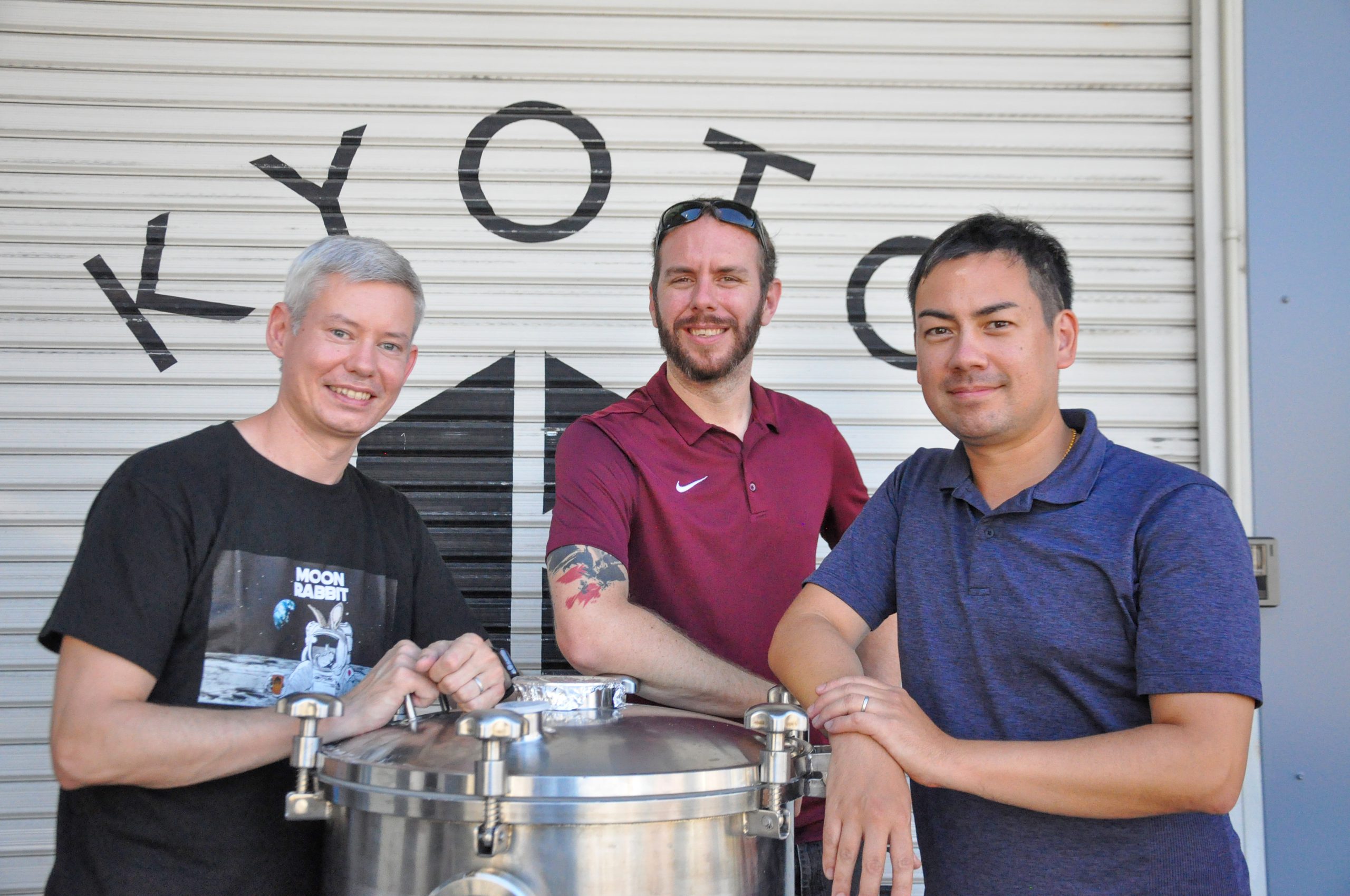
Late last year Kyoto Brewing Company faced a major transition that many breweries eventually experience if they operate long enough: the departure of a founder or long-time head brewer. In KBC’s case, it was Chris Hainge, who held both those titles. He left on amicable terms to explore new paths, leaving fellow co-founders Paul Speed and Ben Falck the task of finding his successor. They appear to have fulfilled that admirably by hiring an experienced American brewer in James Fox earlier this year. We sat down with Fox to learn more about his role in “Kyoto Brewing Company 2.0”, as the brewery describes its new phase.
Since arriving in Japan in March, what are your impressions of Kyoto?
Kyoto is interesting. When I came here, I joked that my safe space was the brewery. There’s nothing weird that’s going to happen and catch me off guard. But when I go out into town, that’s where everything is new to me. I’m still learning the language. There are definitely challenges, but that’s the fun and exciting part of life. Every day is a little bit new, whether it’s an interaction with somebody or buying groceries for the first time.
Any other specific examples like that?
The speed of life here is slower, but I appreciate that. The craft beer industry in America is go, go, go, but not here. I love that in Kyoto you can walk down the street and suddenly there’s some temple you haven’t seen before tucked away in a corner with a beautiful garden. Every day I can wander down a random alley and find something new. Kyoto seems unique in that way—I’ve never experienced that anywhere else I’ve lived. It’s been quite wonderful.
Brewers get inspiration for beer from all kinds of things. Is there anything in Kyoto that has inspired new beers?
Right now, it’s ingredients. There are a lot of new ingredients that you just don’t get exposed to in the U.S. There are even some I’d never heard of. A lot for me is taking in the local flavors—and it’s not just Kyoto, but greater Japan as well.
What are some of the ingredients that have intrigued you?
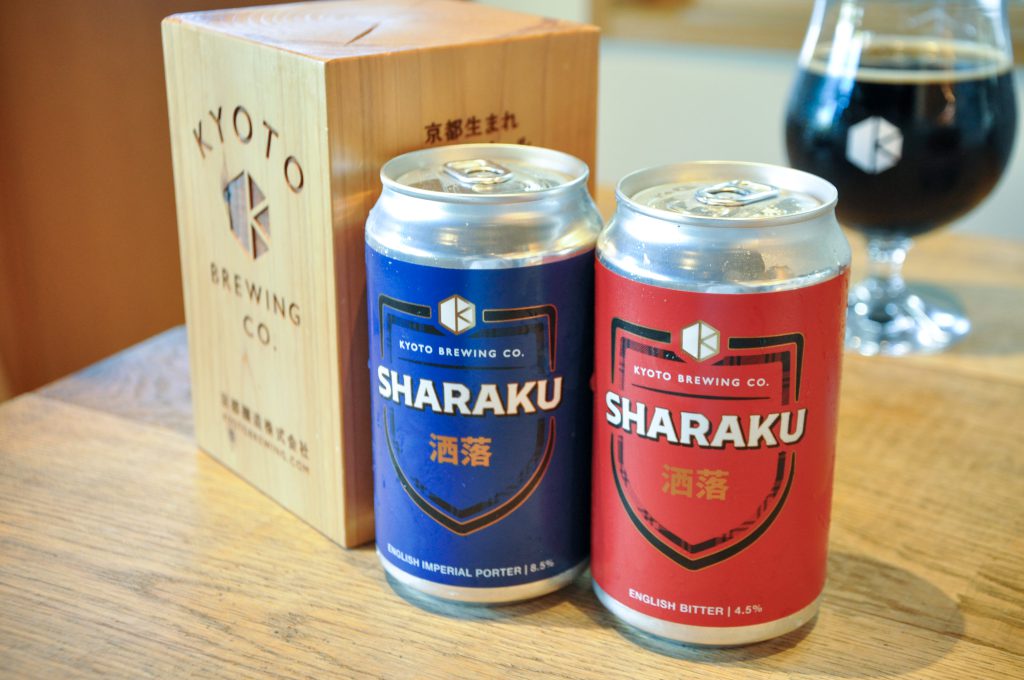
All the different types of matcha. Sansho peppers—I’ve already used those. There are all the various types of citrus fruits. Local grapes from a local winery. I’ve encountered almost ten different spices and fruits of a local nature alone. Then there’s Okinawan black sugar that, before coming to Japan, I didn’t even know existed.
Turning to the concept of “Kyoto Brewing Company 2.0”, what does that mean to you?
It means making craft beer fun, experimenting, and creating new styles. I very much want to avoid doing what I’ve done before. I’ve made a lot of beer in my career so it’s hard for there to not be some similarities with what I’ve brewed in the past. We’re doing some spins on things I’ve done, but a lot of the things we’re brewing at KBC now are new to me. It’s “James Brewing 2.0” as well.
I’m guessing that Speed and Falck are providing input on this process of evolution. How much discussion is there?
Quite a bit. The 2.0 concept isn’t just recipe-driven; a lot of it is process-driven as well. There are small changes that I’ve made to the brewing process. We’ve brought in a lot of new equipment to help us scale our operations up. The more toys you have, the better control you have over your process, the more consistency you have, the more granular you can become with the beers you’re making.
So you’ve gotten them to buy you some nice toys like a centrifuge? (Note to readers: a centrifuge is a machine that separates solids—such as yeast, hops, and proteins—from the liquid beer through centrifugal force, most often performed during the transfer from fermentation to the conditioning tank.)
Yes, actually (laughter). We’ve been using it for a few months, leaning into it more and more. Ours is designed more for light lagers, but it’s not as if we’re only making light lagers. We’re modifying it and working with the company, Alfa Laval, to make sure it does what we want it to do, so that it will help us make anything from a very hazy IPA to a crystal clear lager.
Regarding the recipe-driven side of your work, since coming to Japan, trying the cuisine, and drinking its beverages, certainly that must have influenced the direction of some of the beer you’re brewing. If that’s the case, can you provide some examples?
Sweet beverages don’t seem as popular out here, which works for me. As for ingredients, like I mentioned, we used sansho—I’d never experienced pepper that had citrus character to it. That was quite unique. We’re using that in a Belgian tripel that’s coming up. I like the spiciness you sometimes get from tripels, and with that citrus note in there, I think it’s just going to be beautiful.
Have Speed and Falck said, for example, make a line of hazy IPAs? What type of specific input are you getting from them?
Speed definitely likes hazies. We’ve made quite a bit of those recently. KBC has been known for Belgian-styles and saisons, which I personally love. That’s a style that’s generally less popular in the U.S. so it’s nice to come to a place that actually drinks them. We’re trying to find a balance in brewing a lot of new, fun, interesting hazies and taking some spins on other beer styles.
KBC’s beers have been relatively mild, in my opinion—they’re not super hopped up. Are you going to introduce more latitude of flavor going forward?
For one of the first IPAs I made, I told them the dry-hop amount I was planning to use and they said that was the most they’d ever done (laughter).
You previously worked at Ballast Point (San Diego) and obviously they brewed some hopped-up beers.
Yes, I started in the Miramar production facility (San Diego) and then moved to their Virginia-based plant when that opened.
Are we going to see some unusual beers from you like Ballast Point’s Indra Kunindra (a famously love-or-hate, curry-inspired beer) or the Tongue Buckler (a rich, unusual 10% abv red ale)? How experimental are you going to get with KBC’s beers?
Very. We’ve already had some unusual ones in the tanks. I don’t want to rebrew some of those older ones from my Ballast Point days, like Tongue Buckler. Those were beers of their time, but everyone’s tastes evolve. We’re trying to keep our beers fun and experimental for a more modern palate. We’re definitely experimenting with big dry-hops, big fruit additions, and spices.
Returning to your background, you went to school in San Diego (San Diego State University, BA in Mechanical Engineering; San Diego City College, AS in Mechanical Engineering), then worked at Stone Brewing, Hillcrest Brewing, Ballast Point, Kane Brewing, and finally Cape Brewing. Please tell us more about these stops.
I was going to school when I started working at Stone and Hillcrest. I had to make a decision: do I go to work using my degrees or do I brew? Craft beer was taking off and I was enjoying what I did. To take a step back, I was in the military before college–five years in the Navy–but working for the government wasn’t something I saw myself doing long-term so I went back to school. I picked up craft beer as a side job and was home brewing at the time. When I wrapped up my degree in 2013, I decided to see how the craft beer thing would shake out. I think I made the right decision (laughter).
How were those early years of brewing?
My experiences at Stone and Hillcrest were building blocks for my role at Ballast Point. Stone was my entry-level job into beer. I started by selling T-shirts and filling growlers. I worked my way up to the packaging line and became the packaging lead there. I was simultaneously brewing at Hillcrest. Then I left both of those to start at Ballast Point (eventually becoming Director of Operations). It’s the one I’m most thankful for in terms of experience. It was the right place at the right time. I worked under some amazing brewers there. I got to see triple-digit growth year after year after year. It was amazing to be a part of that team. It was a rocket ship and everyone had to do their part. Looking back, we didn’t actually know a lot of things. A little bit of it was luck, a lot of it was hard work and being with a great group of people. I definitely learned a lot through those years.
So now you are trying to attach those rocket boosters onto KBC? (Note to readers: Ballast Point famously sold for one-billion dollars in 2015 to Constellation Brands; in the years since, and following the departure of many on the team Fox mentioned, Ballast Point has struggled.)
Yes, but I didn’t know how close to potential failure a lot of things were in the brewery at that time. That’s the nature of the business when you’re growing that fast. You’re sticking things together with tape and hoping that it holds. It wasn’t until I got more experience later on that I realized, wow, we were a little lucky that we were able to hold that together as well as we did.
Tell us about life after Ballast Point.
I stayed a couple years after the Constellation purchase, but changes were starting to happen, and the writing was on the wall. I was looking to get back into the smaller side of brewing, where your input matters more. It’s easy to get lost in the ‘machine’ of a brewery the size of Ballast Point. I wanted to get back to where you know everybody in the company. I wanted more instant feedback and that family aspect of working with a team. I wanted to reconnect with the passion and what made me fall in love with craft beer in the first place.
You were at Cape May for five years, and you also shepherded the brewery through COVID, correct?
Yes, and a lot of growth, too. I think when I started they were brewing 18,000 barrels a year. At their peak, we were up to around 50,000 barrels.
If so, then you grew the brewery’s production in the middle of COVID. What was the key to that growth, especially in a market where there were nearly 10,000 craft breweries?
Yeah (laughter). Obviously, you can’t get anywhere without quality. Other than that, it’s being nimble, having a good team, being able to roll with the punches. I used to joke that if things aren’t breaking, you’re not brewing. It’s being able to adapt to changes. When COVID hit, we had just put in a canning line. Ownership at the time was worried that everything was going to be shut down and didn’t want to brew. I understood those fears, but I did the opposite. I filled up the tanks and thought, ‘If people are stuck at home, they’re going to want beer.’ Fortunately, I was right. I don’t want to think about what would’ve happened if I had been wrong (laughter). When the faucets opened full again, we were poised to capitalize on it. I think it was a record growth year for us, or close to it.
You mentioned it’s important to have a nimble team. What does that entail?
It’s building a team that feels comfortable in what they do. You can teach anybody how to do almost anything. But I find it much more important to find out why somebody is doing something, because if they don’t know why things go wrong—and they always go wrong—they can’t understand the steps needed to avoid that. A team having the training to do that is huge. It saves downtime. It makes things more efficient. It makes what could be big hurdles, small speed bumps.
I imagine this might be difficult for you in Japan, where delegating tasks works differently. Japan is generally more management-oriented, and there’s less encouragement to think outside the box. Have you found your job more difficult?
No, actually, I kind of find myself fortunate in that regard! One of my bigger strengths has been building strong teams. Sometimes that takes many years (laughter), but I’ve always been able to build strong teams. That being said, here at KBC, this is the strongest team I’ve ever stepped into on day one. There weren’t a lot of bad habits, everyone cares about what they are doing, they are mindful of the process. A lot of the major hurdles I had building teams in the U.S. are much lower here.
That sounds like a legacy of your predecessor, Hainge! Would you say your crew is more industrious here, which Japanese workers seem to excel at, or that they don’t cut corners?
Yeah, industrious, but it’s more that they care about what they’re doing. You can teach a lot of things, but you can’t really teach work ethic, you can’t teach somebody how to care. They have to be passionate on their own.
Over the last six months, which breweries in Japan have you been able to travel to?
We’ve done a lot of collaborations, including with Y.Market, Zakkoku Kobo, DD4D, and West Coast Brewing. I’ve been to some of the local ones in Kyoto, like Kyoto Beer Lab. We stopped by Teenage Brewing. A handful of others.
Beyond those, are there beers or breweries that you’ve tasted and been impressed by?
Overall, I’ve been impressed with the quality of beers in Japan, it being a younger craft beer scene. They’re brewing ahead of their time. The average quality of beer in Japan is better than the average quality of beer where I was previously working in New Jersey. For the constraints of ingredients, there are some people making some pretty good hoppy beers.
What do you do in the free time that you don’t have (laughter)?
For the time I don’t have, I have way too many hobbies. I can say, generally, that I really like building stuff. I make furniture. I’ve built a race car—it’s not out here, but it’s definitely coming. I built it and like to race and compete with it. Making art, painting–that’s some stuff I need to bring out here. Snowboarding, disc golf––anything that challenges me.
Do you have a bucket list for Japan yet?
No, I didn’t come out with specific expectations. I’m more just looking to explore, discover, and see what Japan has to offer. I’ll make the most of anywhere that I am. That means taking a step back and appreciating what’s before you—letting it take you where it goes.
Thank you James, and good luck!