



By Lars Marius Garshol
Among the first things you learn as a brewer is that to make beer you must go through three steps: mashing the malt to make wort, boiling the wort, then fermenting it. You can imagine my surprise the first time I heard that some farmhouse brewers don’t boil the wort. That is, they make what’s called raw ale.
What you’re told as a brewer is that it’s necessary to boil the wort in order to kill the bacteria in it, since otherwise the beer will go sour. Now, I first heard about this a long time ago, but even then the fact of brewers making sour beer deliberately was not unknown, and so I figured these beers could still be worth trying. When I was offered a sample from a farmhouse brewer making raw ale, I eagerly accepted. To my surprise, the beer was not sour at all. Even more astonishing was that it was actually excellent. And it didn’t taste like any beer I had ever had before.
The brewer who made the beer was from Hornindal in western Norway, a region known for its raw ales. But it’s not the only place where raw ale is made. As I tried more beers I came to see that his beer had strong similarities with the farmhouse ales of Lithuania, and that the connection was that none of these brewers boiled their wort.
The textbooks were right that the boil is an important part of the brewing process, because it definitely has a big influence on the flavor of the beer. With some practice you can learn to recognize raw ales simply by taste.
In fact, it’s not that the textbooks are wrong. Nearly everything the textbooks say about boiling the wort is true. It’s just that the conclusions most brewers drew from that were wrong. So how does raw ale brewing work?
Boiling the wort does kill bacteria, but before the boil comes the mash, where the malts are mixed with hot liquid until it reaches 65-70C, and it stays at those temperatures for at least an hour. That’s more than enough to kill the bacteria in the mash. This is what’s known as pasteurization. So there’s no need to kill the bacteria one more time.
The other reason the textbooks say the boil is important is that you must boil the hops to get alpha acids from the hops to dissolve in the wort. Those are the main substances in the hops that protect the beer against infection.
The brewer from Hornindal, however, merely let his hops soak in hot wort. It turns out that other substances from the hops also protect against infection, although without the alpha acids the protection is weaker. Still, it was enough.
Other farmhouse brewers have used other methods, like boiling the hops in a little bit of water, then mixing that in. Some boil them in a tiny part of the wort instead. Both of these methods work just as well as boiling the entire wort.
The final reason to boil the wort, say the textbooks, is to make protein from the malt coagulate and drop out. In raw ale that doesn’t happen, and the protein leaves a haze in the beer similar to what you get if you use wheat or oats in the beer. The taste from these raw proteins, however, is different, and a number of other chemical reactions in the wort also fail to happen when you don’t boil the beer.
But the consequence is just that the flavor of the beer is different. It’s a bit like how tomato soups are boiled, but Spanish gazpacho is not. Gazpacho certainly tastes different, but it’s not a bad dish just because it’s not boiled.
The protein in raw ale gives it a slightly sharp mouthfeel, which can actually balance the sweetness in the beer even without hops. There are also some undefinable “green” flavors in it, and it retains more of the taste from the malts, which often comes out as grainy and strawy. The protein also fills out the body, making these beers feel fuller and rounder-bodied than comparable boiled beers.
Just as in hefeweizen, the amount of sediment in the beer makes a big difference to the flavor. The brewer can filter out most of it and remove a lot of the raw ale flavor, or they can leave it in. If they leave in too much it can ruin the mouthfeel of the beer.
Raw ale may sound like an obscure kind of beer, but in farmhouse brewing it has been very common in the UK, Germany, Scandinavia, Finland, the Baltic countries, Austria, Georgia, Belarus, and Russia. At least. In fact, close to half of the first-hand accounts of farmhouse brewing that I have collected indicate people brewed raw ale.
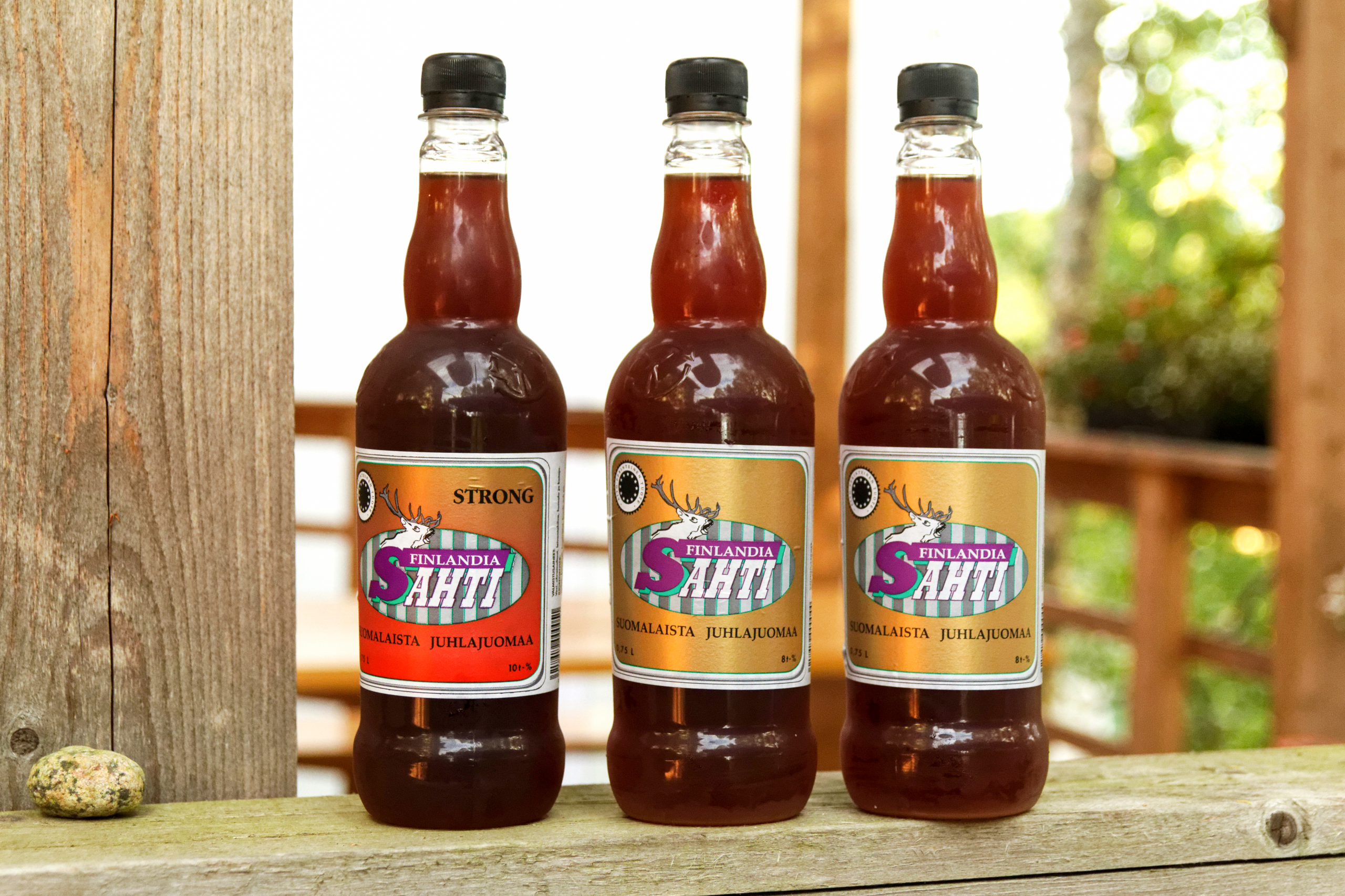
So raw ale is not a style, but rather a family containing a large number of styles, like Norwegian kornøl, Estonian koduõlu, Finnish sahti, Lithuanian kaimiškas and keptinis. Some farmhouse styles are not even consistent about it: Norwegian stjørdalsøl and Swedish gotlandsdricke are sometimes boiled and sometimes not. These two styles, however, are so intensely smoky that it’s difficult for the drinker to tell whether the beer is boiled or not. Historically, Berliner Weisse was also a raw ale.
Many people wonder how farmhouse brewers ever came up with the idea of brewing this way, but that’s actually the wrong question. Let’s take a little detour so you can see why.
Historically, metal kettles were extremely expensive. Back in the Bronze and Iron Ages chieftains and princes served beer and mead out of big copper and silver cauldrons to show their wealth. One of the famous viking-age poems describes how the gods come home thirsty from a hunt, but have no kettle, so they can’t make beer. The entire story is about the gods being on a quest for a kettle big enough to make beer. As late as the 19th century, farmers in some parts of Norway were displaying copper kettles as signs of their wealth.
In other words: most brewers historically had to brew without a kettle. That made it very difficult to heat the mash to 65-70C, but they solved that by heating stones in a fire and dropping them into a mix of cold water and malts in a wooden vessel. That’s how the so-called steinbier, or stone beer, was made. Of course, boiling the wort would be even harder, but they solved that by simply not boiling.
Boiling the wort seems to only have taken off around 1200, and while the method has been gradually spreading ever since, there are still many farmhouse brewers who haven’t started doing it. In other words: brewers didn’t come up with the idea of brewing raw ale. They eventually came up with the idea of brewing boiled beer, and they did so very late in the evolution of beer.
It’s often said that farmhouse brewers don’t consciously design their recipes, but simply follow the tradition and brew the same beers their ancestors brewed. There certainly is a lot of truth to that, but boiling the wort is one intriguing example that shows how modern brewers are also sometimes simply following tradition. Very few modern brewers make a conscious decision whether to boil the wort or not. They simply boil the wort because everyone else does.
That, however, is beginning to change. In Japan, the Kunitachi Brewery (see JBT51) makes raw ales, and in Norway the Bygland, Brulandselva, and Eik & Tid breweries do the same. Nøgne Ø, a famous Norwegian craft brewery, even deliberately skips the boil in some of its weaker beers, in order to fill out the body and retain more of the flavor from the malts. Basically they do so to compensate for the beer being weaker than it ought to be because of legal restrictions. To me that’s an intriguing example of a brewer deliberately using raw wort as a technique to get a specific effect in a specific beer.
While raw ale is an ancient brewing method that ultimately derives from the difficulty of accessing metal all the way back in prehistory, it has slowly started making a comeback–mainly because of the flavor and mouthfeel, but now with the energy crisis that comeback may start gathering speed. Boiling the wort for an hour takes an enormous amount of energy, after all. Why do it if you can make better beer without it?