



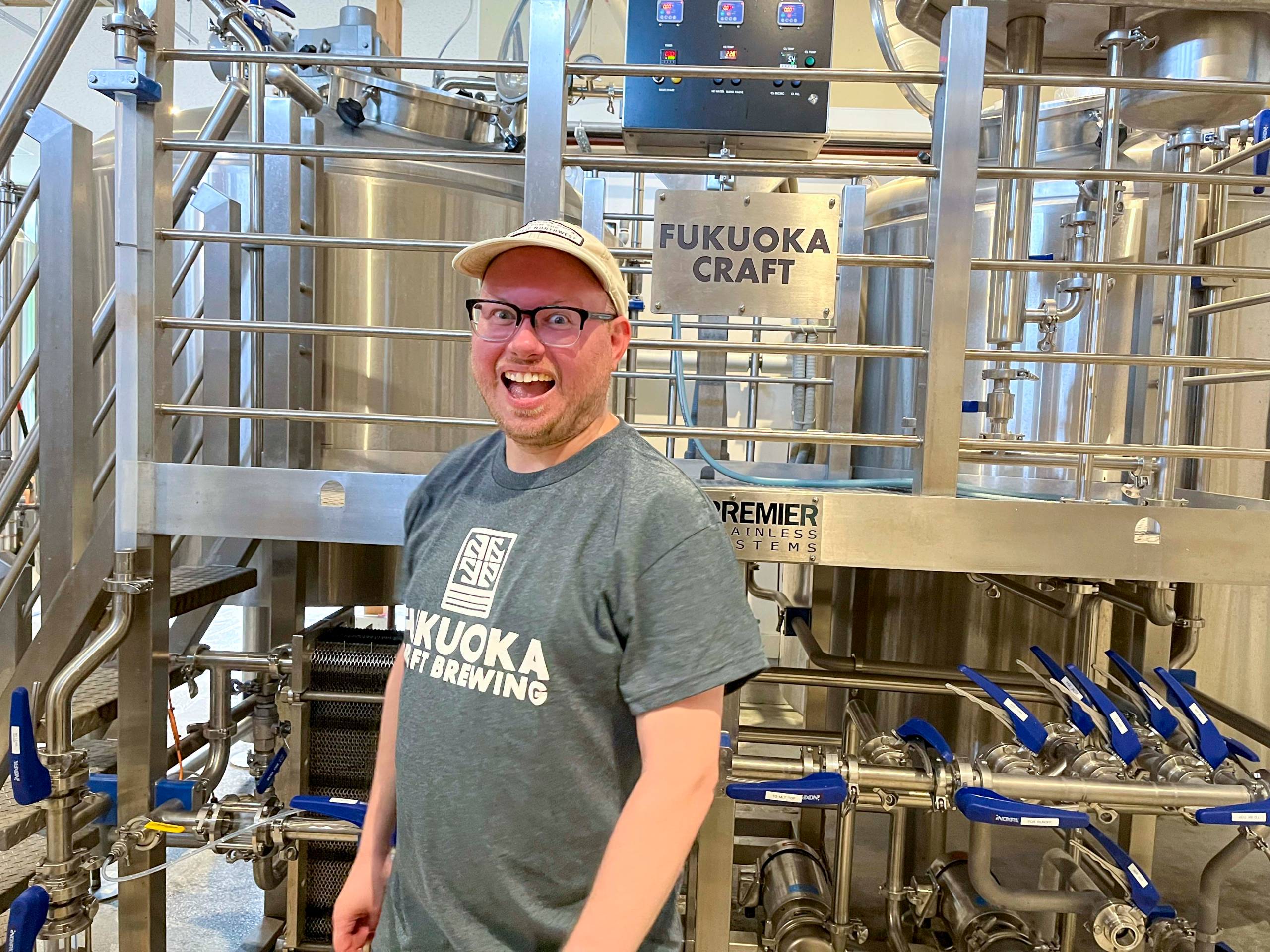
By Wes Lashley (Brewer at Fukuoka Craft)
About sixteen years ago, I had my very first American IPA at a local craft beer-focused watering hole near my apartment in Seattle. I was new to Seattle and craft beer. The first few sips of the beer were not what I was expecting. My untrained palate thought the beer tasted terrible, like nickels. I hated it. But I didn’t let that deter me from craft beer. Slowly, after more visits and more beers, I started to enjoy craft beer. But wait, I’m getting way ahead of myself. This article is about the American IPA!
The American IPA is one of the most popular beer styles in the US–maybe the world. It’s the American version of the English IPA using, of course, American ingredients, but it has less body and is more highly hopped than its counterpart. The style is known for its malty backbone and the use of West Coast hops (aka “C Hops”; more on that below). When did the American IPA style come to be?
According to the Beer Judge Certification Program (BJCP) style guidelines, the first American IPA (though it wasn’t called an IPA at the time) is the Liberty Ale brewed by San Francisco-based brewery Anchor Brewing in 1975. It was brewed until the summer of 2023, when Anchor closed, and was one of the first beers to feature Cascade hops. Fritz Maytag, the former owner of Anchor, implemented an age-old technique of dry hopping the beer by putting the hops in a mesh bag during secondary fermentation. Today it’s a technique that many breweries use. Other notable early style pioneers are Sierra Nevada’s Celebration Ale (1981–present) and Bert Grant’s India Pale Ale (1983–2004).
Early versions of the style employed “C Hops”, which are classic American hops generally exhibiting a citrusy or piney character. The names of these hops all begin with the letter “C”, the traditional four being Chinook, Centennial, Cascade, and Columbus. Let’s skip now to the present day. More recently bred American varieties as well as new non-American varieties (like Galaxy from Australia) are being used by breweries to bring different and unique hop flavors and aromas to the style. But what does it taste, smell, look, and feel like?
The flavor and aroma can be described as citrusy, floral, and piney which comes from the American-grown hops. Bitterness is generally medium to high with good balance between the malt and strong hop flavors. The color is medium yellow to medium orange with the mouthfeel being medium bodied and the carbonation medium to high. The ABV ranges from 5.5% to 7.2%.
The style is now brewed all over the world, including here in Japan. Some notable American IPA-style beers in Japan that are consistently good are Ise Kadoya Brewery’s Neko Nihiki, West Coast Brewing’s Starwatcher (WCIPA), Minoh’s W-IPA, and Shiga Kogen’s Snow Monkey. (Minoh’s is actually a “double IPA” with much higher alcohol but its characteristics are very similar to an American IPA).
The American IPA has come a long way since its first iterations. The style has changed the face of the craft beer industry and has spawned numerous variations: the Hazy IPA, New England IPA, Milkshake IPA, West Coast IPA… the list goes on and on. The style is always evolving as breweries add new hop varieties, rework, and tweak the style, propelling it to new territory. What will we see next in the world of the American IPAs?