



All beer lovers know Munich, Germany as a beer capital of the world. They might not know just how much the city has to offer, however. It checks all the boxes for a beery visit, with (generally) pleasant weather, great food, and a huge variety of things to do and places to see. It’s easy to fly there non-stop from Japan, and it’s close to lots of other small towns and cities, making a great base for further exploration.
Introduction
Munich achieved city status in the 12th century, but only started to grow in importance after becoming the capital of Bavaria in 1506. It experienced something of a golden age with the establishment of the Kingdom of Bavaria in 1806, after which the monarchs undertook many grand building projects. This era effectively came to an end with the start of WWI, and life here became much worse after Germany’s defeat. Munich was then an incubator for Nazi politics in the 1920s and 30s. It was heavily bombed during WWII, but painstakingly rebuilt after the war. Today Munich has a population of nearly 1.5 million, with 6.2 million in its metropolitan area. Some 30% of the population is non-German, creating a multicultural atmosphere.
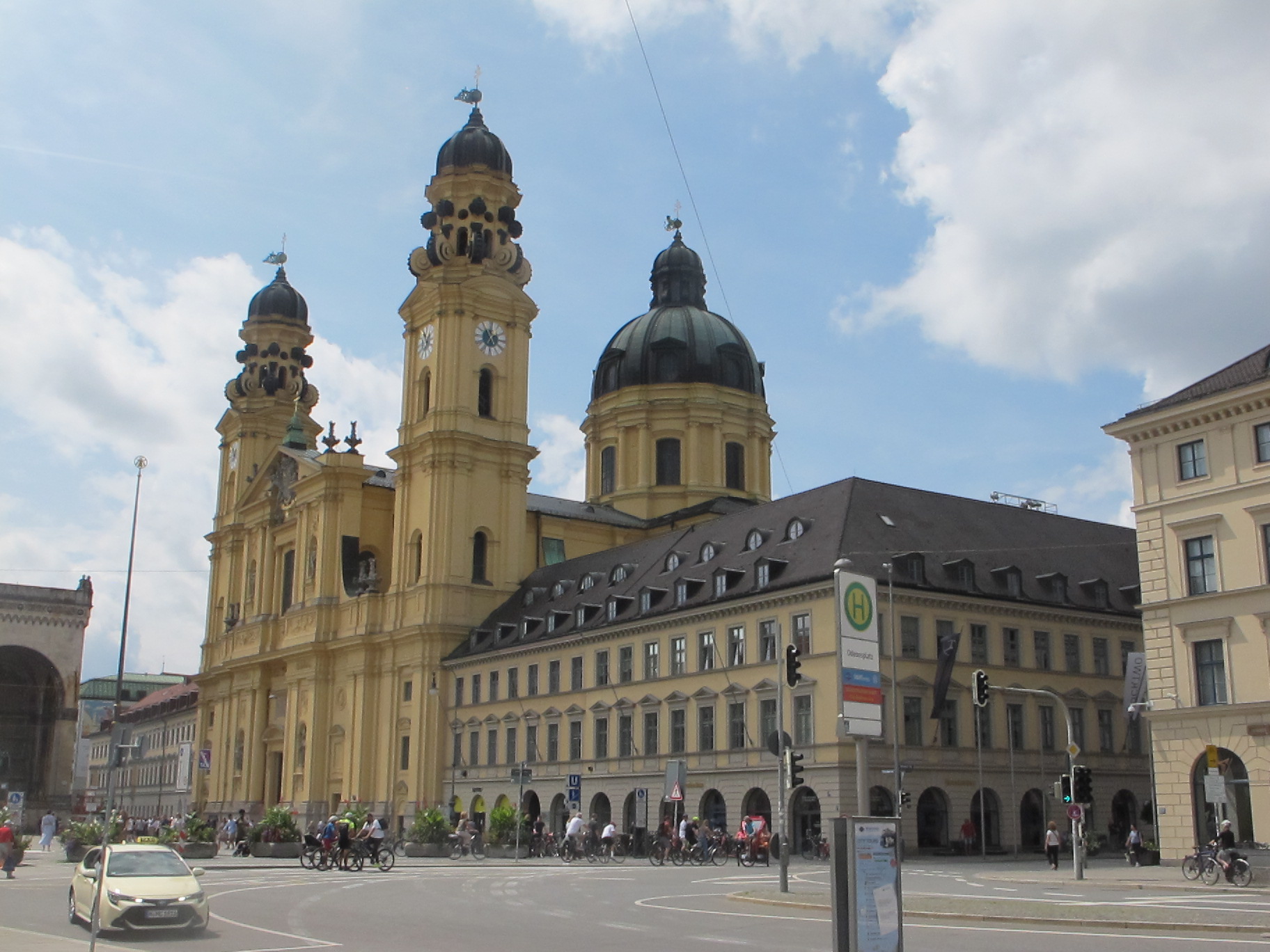
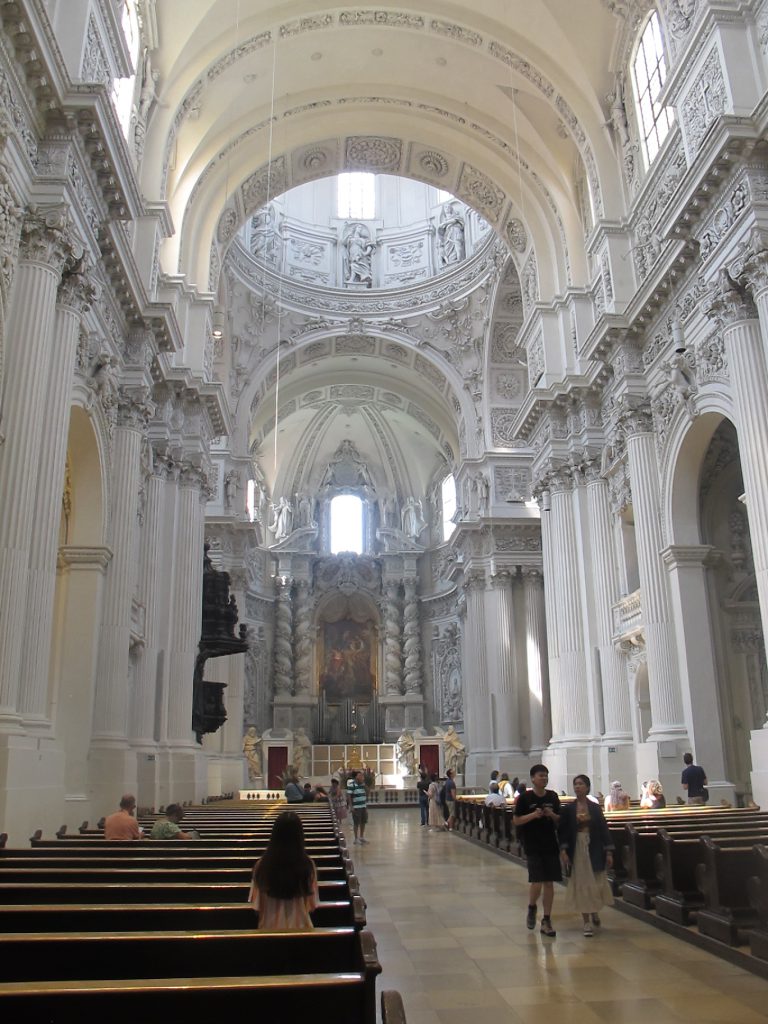
The center of Munich is Marienplatz in the old town, which is filled with fantastic architecture. Check out the old and new town halls, and don’t miss some of the fabulous churches in the area. Frauenkirche is the most famous–a symbol of the city since its construction in the 15th century. St. Michael’s, Theatine, and Asam Church are also worth seeing. Walking around the old town, you’ll probably be unable to resist a visit to the Hofbräuhaus, probably the most famous beer hall in Germany, dating to 1589. Just try not to be disappointed by the crowds or rushed service.
Museums
Munich rivals nearly any city on the planet in terms of its wealth of museums. The most famous is Munich Residenz, a collection of buildings in the old town which was once the royal palace. The Residenz Museum is one of the most popular tourist attractions in the country, renowned for its interior decorations as well as its collections of furniture, porcelain dishware, jewels, clocks, coins, and just about every other collectible item that a king or queen would want to collect. Go early if you do, and be ready for a long, intriguing visit.
Nearby is the Kunstareal, the Art District, where you’ll find Munich’s three Pinakotheken Art Galleries. The Alte Pinakotheken houses art from the 14th to 18th centuries. It has one of the world’s best collections of Rubens, and houses the Madonna of the Carnation by Leonardo da Vinci. Dürer’s Self-Portrait is another masterpiece. A particular favorite is Munich Beer Garden by Max Liebermann (1884). It conveys the joy of folks of all ages spending a sunny summer afternoon in a beer garden chatting, playing games, and listening to music while enjoying rich, dark beer. Front and center, a mother is lovingly sharing hers with her daughter, who looks to be about four years old. The Neue Pinakothek houses a large collection of Impressionist art, with works of all the masters included, while the Moderne combines modern art with several other small museums.
The list of Munich Museums goes on and on. In Königsplatz is the Glyptothek, which houses the State Antiquities Collection, mainly ancient Greek and Roman art collected by the Kings of Bavaria. The Bavarian National Museum focuses on the history of Bavaria. The Deutsches Museum is Germany’s oldest museum dedicated to science and technology, and also one of the world’s most popular. Add to these the Museum Five Continents (with world art), The Egyptian Museum, the Museum of Paleontology, the Geological Museum, and the State Collection of Zoology, and you’ll be fretting over how to best balance museum time with beer time.
Parks and Gardens
Munich is a city full of gardens. If the museums and central city streets get too crowded, venture northeast of city center to the Englischer Garten, one of the largest city parks in Europe. Originally a hunting ground for the rulers of Bavaria, it was made into a public park in 1789, done in the English landscape style, which was sweeping through Europe at the time. Rivers, forests, and meadows make it a lovely place to revel in the fresh air, away from the busy movements of the city. It includes a Japanese garden and teahouse, a Chinese pagoda, and an artificial river for surfing. The park also houses several beer gardens, of course.
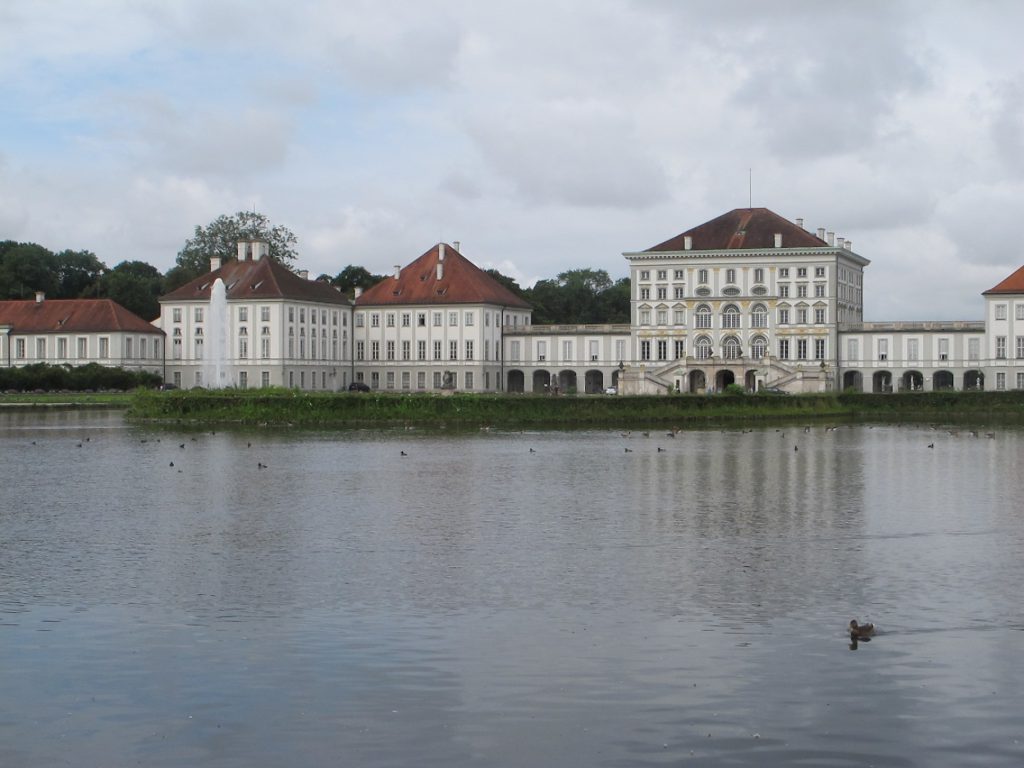
For an artistic gem of a garden, however, you must visit Schloss Nympenberg, on Munich’s west side. It was the summer palace of the Bavarian ruling family and was built in the 17th and 18th centuries. The 200-hectare garden was first laid out in the Italian Renaissance style in 1671, then eventually redone in the English style, but many of the earlier elements remain. A long canal begins with a nicely crafted waterfall in the west, and flows toward the palace and the baroque-style gardens immediately behind it. Several miniature palaces dot the gardens–definitely get the ticket that grants access. From Nymphenberg, you might consider a short tram ride to the Hirschgarten for lunch in Munich’s largest beer garden.
Lakes
To the south of Munich are several clear alpine lakes easily accessible by train for a day trip. Perhaps the most interesting choice is Chiemsee, a beautiful lake with views of the Alps that is less than an hour from Munich by train. At the lakeshore you’ll find swimming spots, boat rentals, lakeside walks, and of course various restaurants and beer gardens. Ferries ply the lake, with the two most popular destinations being the Herr and Frau or “Sir and Madam” islands. On Herreninsel you can see the Neues Schloss Herrenchiemsee, Bavarian King Ludwig’s attempt to re-create Versailles. The eccentric King Ludwig is best known for Neuschwanstein, the white Swan castle, but he built several others as well. Chiemsee Castle, which was only partially completed upon the King’s death, was his homage to King Louis IV of France. It was also his attempt to build a copy of the Sun King’s own palace, complete with elaborate fountains and a grand canal that looks back towards the main town of Prien. Naturally, there is a beer garden on the island, too. While waiting for the return train to Munich in the town of Prien, stop by Wieninger Brau to enjoy the fantastic local brew, along with classic Bavarian dishes.
The Best Beer Experiences in Munich
Not all Munich beers and beer experiences are equal. Here we give pointers on how to make the most of your time in the city. There are of course hundreds of bars and restaurants where you can get fresh local beer. Most are aligned with a single local brewery and only serve their beers, typically two to three on tap and a few more in the bottle. The three main styles are Helles, Dunkel, and Weizen. Helles is a pale lager with rich, bready malt and light hops. Dunkel, a dark lager with a nutty, caramel malt character. Weizen is a wheat beer with yeast-driven aromas of cloves, bananas, and citrus fruits. Most breweries also make a Pils, which is drier and hoppier than the Helles, and usually served only from bottles. At certain times of the year you will find Festbier, basically a stronger (~6%) version of the Helles, and Bockbier, pale or dark, typically 6.5-8% abv. Unlike craft brewers around the world, most Bavarian breweries still stick to seasonal brewing schedules. You may have trouble finding these out of season.
When chasing down the best beers in Munich, always be on the lookout for the Bayerische Anstich, which consists of beer poured straight from the barrel by gravity, without added CO2. This method, which for centuries was the only way of serving beer, ensures a soft, gentle carbonation that leaves you feeling less full and allows the subtle flavors of a good Helles to shine through. Gravity pours can be found at select bars and beer gardens, and often only a limited number of kegs are tapped at certain times of the day.
Since your time in Munich may be limited, below we suggest some of the most unique, fun, and high-quality places to drink. It includes five different categories of drinking establishments, in order to give a well-rounded introduction to the Munich beer scene: a biergarten, a brewery taproom, a beer-focused restaurant, a specialty beer bar, and a brewery visit in the suburbs of Munich.
Best Biergarten
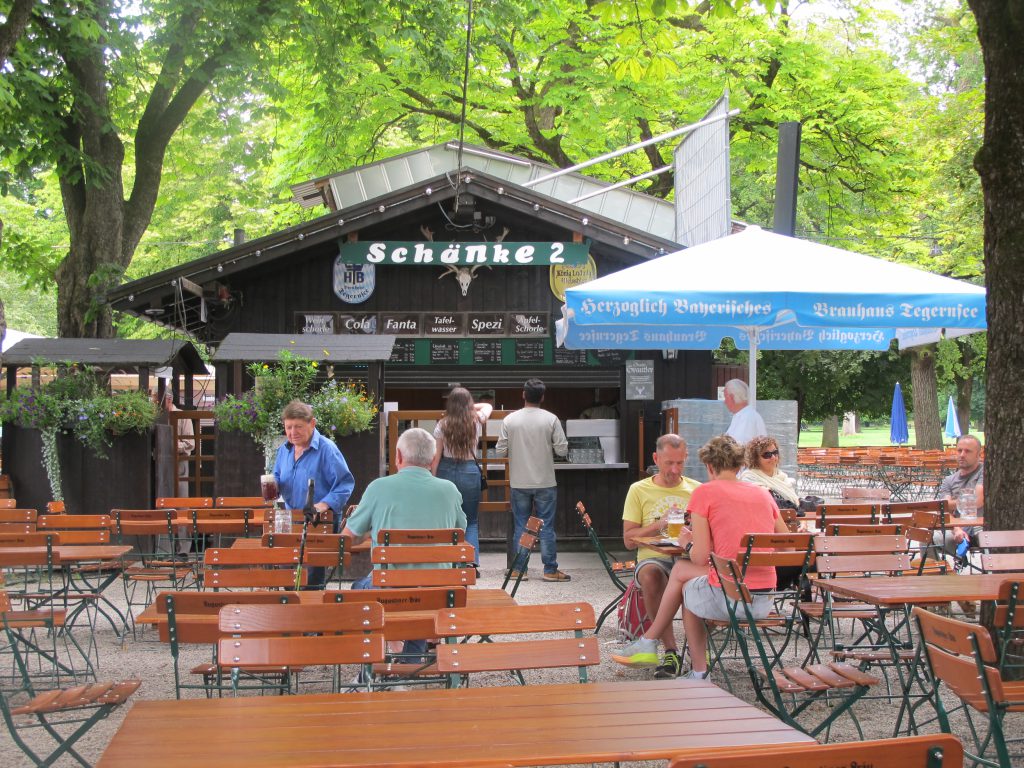
The beer garden is certainly a beer drinker’s paradise in Munich. If we could only choose one, it would be Königlicher Hirschgarten, which claims to be the largest beer garden in the world. It’s open year-round, but is particularly lively on summer evenings and weekends. What makes this garden great is the wider variety of beer available. While most beer gardens offer beer from just one brewery, Hirschgarten serves three: Augustiner, whose Lagerbier Hell is available from the wooden barrel; Tegernsee, with their wonderful Spezial; and Schlossbrauerei Kaltenburg, the brewery owned by the Prince of Bavaria. Here you can try their König Ludwig Dunkel and Prinzregent Luitpold wheat beers!
Food is available, either in the formal restaurant or from the various booths throughout the garden. You may, in traditional Bavarian manner, bring your own food, but with classics like grilled chicken, roasted trout, and pork knuckle braised in beer available, you might want to indulge in what they’re serving.
Other choice: Augustiner Keller, also open year-round. It’s the place to go to try their glorious Edelstoff from wooden barrels.
Best Brewery Tap
Beer enthusiasts in Munich almost all agree on which city brewery is the best: Augustinerbräu. Of the traditional Munich breweries, it’s the only one that’s still independent. Augustiner has a bit more of a craft mentality than its multi-national or state-owned competitors. Judge for yourself at Augustiner Bräustuben, which is connected to the brewery, a short walk from Munich Central train station. All their beers are available, and the Lagerbier comes from the oak cask in evenings and on weekends. This place is atmospheric with well-worn wood paneling to accompany the Munich residents who fill its hall daily. Try the Lager and the Edelstoff side-by-side to see which you prefer. The difference is subtle–the latter a bit stronger in alcohol and hops. Both are excellent.
Other choice: Giesinger. While much smaller than the others, it has quite a craft beer-like environment. Their line-up is broader than usual for the region, and includes a wide variety of year-round Bock beers and some not-so-German ales as well. Giesinger Bräustüberl is the best place to try the range.
Best Beer-focused Restaurant
Schneider Weisses Brauhaus used to house the iconic wheat beer brewery until it was destroyed in WWII. Brewing has since moved to a larger facility in Kelheim, but their taproom remains a popular Munich attraction. Located next to the Viktualienmarkt (the old town market), the restaurant features “Kronfleisch” or less-valued cuts of meat—organs and the like. You can get various sausages, schnitzel, and pork knuckle, too, alongside more challenging specialties like suckling pig, calves’ lungs, and veal sweetbread-and-spleen sausages. Nothing goes better with these than Schneider’s fabulous wheat beers. If you want a traditional Bavarian breakfast, this is also the place to go. A pair of Weisswurst sausages, a pretzel, and a pint of Schneider Weiss is worth trying at least once in your life. While here, be sure to drink Aventinus Weizenbock on tap. It’s generally considered the world’s best Weizenbock, and it’s rare to find it served that way.
Other choice: Ayinger Am Platzl, directly across the square from the Hofbräuhaus. It features much of the great Ayinger lineup on tap, and high-quality, traditional Bavarian fare. They tap their Jahrhundert Export beer from a wooden barrel nightly.
Best Craft Beer Bar
Munich is the center of southern Bavarian beer culture, to be sure, but beer lovers know that it has a rivalry of sorts with the beers of Franconia, once a separate state just north of Bavaria, but now part of Bavaria proper. Many readers have probably tried Schlenkerla, the famous smoked beer of Bamberg, but there’s much more to Franconian beer. In the area around Bamberg, there are more than two-hundred traditional breweries. Most specialize in Kellerbier, unfiltered lagers aged for several months that are meant to be served at their summer beer gardens. These beers, which come in all shades from golden to amber to brown, differ from their Munich counterparts in being hoppier, drier, and yeastier. They offer an altogether more full-on sensory experience than the delicate, subtle flavors of a Munich Helles or Dunkel.
Not too long ago you could search for days and never find a Franconian Kellerbier in Munich. Gregor Frederickson changed all that when he opened HopDog in 2020. He travels up to the Bamberg area monthly to fill up a van with the best examples of Franconian classics. After you have tried the best that Munich has to offer, we recommend you stop in here and sample these other great, traditional German brews. It will be a precious education for those who haven’t the time to travel to Bamberg.
Other Choices: Bierkiste München, right around the corner from HopDog. It has a couple of local craft beers on tap and a wide selection of bottles for take-out or drink-in. Tap House München is the local outlet for Camba Bavaria beers, but they have many beers to choose from among their forty-two taps..
Best Suburban Brewery Visit
There are many great breweries located on the outskirts of Munich, but we have to vote for Weihenstephaner, the oldest brewery in the world, situated in the town of Freising to the north. The brewery sits on a large hill overlooking the town. There is a beer garden open in the summer and a year-round restaurant, while the brewery itself offers tours. Most of their lineup is available on tap and they have a wide range of food as well. You should also visit the Freising Cathedral while in town. It’s a massive 12th century Romanesque basilica seated atop another hill in the town center. Stop into the nearby Huber Weisses Brauhaus to sample their excellent Weizen and Kellerbier. One suggestion that might be helpful: Freising is ten minutes by bus from Munich airport, so it’s a good place to stay after arriving in the evening, giving you the chance to visit the two breweries.
Other choices: Brauerei Aying to the southeast of Munich center is one of our favorites, with a wide range of excellent beers. Klosterbrauerei Andechs also sits atop a hill in a monastery that is a short train ride from city center. The view is great and so are the beers.
d’Wiesn (Oktoberfest)
We cannot cover beer in Munich without mentioning the Oktoberfest. Each year the festival runs for sixteen days, ending on the first Sunday in October. This is doubtlessly on the bucket list of many beer lovers. Those who are dying to go to the Oktoberfest should make their reservations early, as the whole city of Munich is jam packed during the fest.
Beer-wise, the Oktoberfest might actually be a letdown. Each tent serves just one beer—that brewery’s Festbier. Tourists generally go to Oktoberfest for the experience and the bragging rights, not to try many kinds of good beer. That said, Augustiner gets a special thumbs-up as the only brewery serving their Festbier solely from wooden barrels. One visit to Oktoberfest is probably enough, but it is an experience not soon forgotten.
Helpful Travel Info
If we’ve convinced you and you decide to visit Munich, consider these tips:
-For 2025, the Deutschland Ticket will be available for €58 per calendar month. You can use it on all non-express trains, plus all metro lines and all buses for a month. It’s a must if you want to go anywhere outside the city, and easily pays for itself just with a round trip from the airport and a week’s local transportation. It’s a bit tricky to purchase, however; it must be bought online, so read up on it before you go.
-Munich Airport is a major hub for Lufthansa, and they fly direct from both Haneda and Kansai. Airbräu is a brewery located in the airport, just in case you’re can’t contain yourself.
-If you plan on seeing many different museums and palaces, look into the Munich Card and Munich City Pass.
-If you truly love German beer, add on a trip to Bamberg as well. On the ICE, the trip takes less than two hours.